


Loyalty is overdue for an upgrade.
Consumers now expect rewards to be personal, instant, and integrated with how they pay, move, shop, and live.
Most programs weren’t built for that, and it shows in falling retention, tired reward mechanics, and rising pressure on ROI.
So we listened to what customers respond to and turned the signal into a strategy. These 9 trends are the loyalty moves primed to grow revenue in 2026. Let’s get started!
9 Loyalty Trends to Boost Your Revenue in 2026 (with Audience Tips!)
If your loyalty program still:
- Depends on slow, accumulation-based earn-and-burn for a £10 voucher over months,
- Treats loyalty as a cost centre rather than a data-driven growth lever tied to ROI,
- Operates in silos (cards, app, branches, partners) with no unified, digital loyalty program 2026 roadmap,
- Ignores sustainability, trust, and ecosystem partnerships as core design principles,
You will lose share to competitors who treat loyalty as a product and revenue engine, not a marketing afterthought.
1. Hyper-Contextual Micro-Rewards: Why Speed Equals Relevance
Customers are tired of delayed gratification. The old model? "Spend for six months to earn a £10 voucher." Dead. In 2026, relevance equals speed. The closer the reward is to the moment of action, the more it shifts behaviour and keeps your brand in the habit loop.
That is why hyper-contextual micro-rewards are gaining momentum in 2026.
Hyper-contextual micro-rewards are real-time incentives triggered immediately by specific user behaviours rather than long-term accumulation.
How can brands utilise this trend? By shifting from accumulation to instant recognition. Become part of the commute, not just the payment rail.
- Customer use your card for a morning commute? Trigger a micro-reward for a coffee at the station.
Test "surprise and delight" triggers on high-frequency, low-value transactions.
- For large enterprises, focus on card-present and app-linked purchases across key categories; for fintechs and digital-native brands, prioritise in-app events and mobile wallet usage.
Once rewards are real time, the next step is showing up in more of the customer's financial life, not just discretionary spend.
2. Embedded Finance: How Can Loyalty Fit Financial Lifestyles?
Embedded finance loyalty integrates reward mechanics directly into essential financial infrastructure like bill payments and savings, rather than just discretionary spending.
Your customers don't view their financial lives in silos. A program that only rewards discretionary spending? One-dimensional. It ignores the bulk of a customer's financial reality.
How can brands utilise this trend?
The strategy should be to integrate loyalty mechanics into the behaviours that drive your balance sheet.
- Let users earn status and better value for healthy financial behaviours: maintaining savings, paying bills on time, and consolidating direct debits.
- Launch a "financial wellness" tier where maintaining a savings balance unlocks higher earn rates.
- For retail banks, tie this to current accounts and mortgage payments; for fintechs, link it to savings pots and automated round-ups.
As you reward the right behaviours across their financial life, the question becomes: how precisely can you tailor value to each customer?
3. AI-Driven Rewards: Can Predictive Tech Replace Generic Segmentation?
To tailor value, unique personalisation comes into play. AI-driven rewards utilise predictive algorithms to anticipate a user's next likely need, offering relevant perks before the customer actively searches for them.
Generic segmentation is a fast track to irrelevance. Customers expect you to use their data to predict their needs, not just track their history. Sending a generic offer to a high-value user? That demonstrates a lack of insight.
How can brands utilise this trend?
- Use predictive AI to shift from "who they were" to "what they're likely to do next."
- Data suggests a user is planning a holiday. Surface travel insurance perks, FX fee discounts, or lounge access ahead of the trip.
- Run an A/B test comparing standard segment offers against AI-predicted individual offers.
Enterprises can start with one high-value segment (e.g., frequent travellers); fintechs can test across their full active base with tighter guardrails.
As personalisation deepens, some customers will pay upfront for a consistently higher level of service and benefits.
4. Subscription Loyalty Hybrids: Is Access the New Ownership?
Subscription loyalty hybrids are models where customers pay a recurring fee for immediate, improved benefits and friction-free experiences instead of earning them over time.
The subscription economy has retrained customers to value access over ownership. They're willing to pay a premium for guaranteed, reliable value.
How can brands utilise this trend?
- Launch a paid tier that feels like an upgrade to everyday life. Immediate utility: free delivery, higher interest rates, premium support. Don't make customers "earn" good service.
- Introduce a monthly-fee tier that bundles partner benefits with core product perks.
For incumbents, position this as a premium upgrade to existing accounts; for digital challengers, make it the default experience with a clear free-to-paid path.
As customers pay more and engage more deeply, they also look harder at what your brand stands for, especially around sustainability.
5. Sustainability-Linked Rewards: Do Customers Trust Your Green Claims?
Sustainability-linked rewards incentivise eco-friendly behaviours, such as digital receipts or public transit use, with tangible value, moving beyond passive donation options.
Sustainability is a baseline expectation. But customers are sceptical of greenwashing. They want tangible proof that their loyalty drives positive impact.
How can brands utilise this trend?
- Reward sustainable behaviours: opting for digital receipts, choosing lower-carbon travel, and purchasing from sustainable merchants. Customers see both financial and environmental returns.
- Offer a "Green Tier" where points earned on sustainable brands are doubled.
Enterprise banks can partner with recognised eco-certifications; fintechs can surface sustainability scores directly in the app and reward “greener” choices.
The more behaviours you reward, the more important it becomes to make every touchpoint, online and offline, feel like one joined-up experience.
6. Phygital Loyalty: How to Erase the Friction Between App and Store
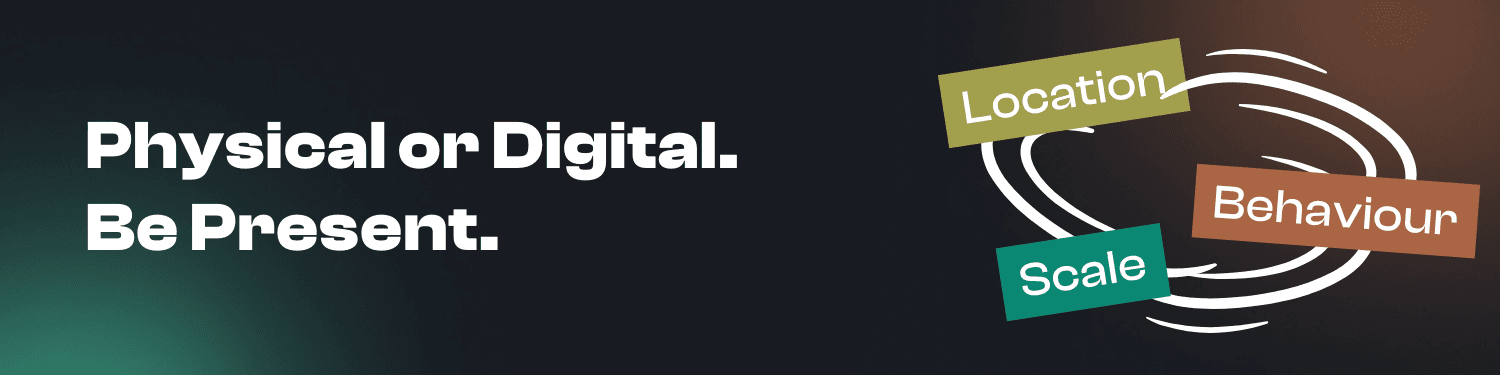
Phygital loyalty uses technology like geolocation and NFC to create a seamless, unified experience across physical locations and digital platforms.
The divide between digital and physical is artificial. If your loyalty program requires a separate login or manual receipt scanning, it fails the friction test. You miss chances to reinforce the habit in the store.
How can brands utilise this trend?
- Use geolocation and in-store tech to recognise customers the moment they walk into a branch or partner store. Make earning and redeeming automatic.
- Test beacon technology in a flagship location to trigger a "welcome back" perk upon entry.
Large retailers and banks should start with a single high-traffic branch; app-first fintechs can simulate “store” experiences via partner pop-ups and events.
Once journeys are seamless, your most engaged customers will want more than smooth transactions. They'll want a sense of stake and belonging.
7. Experience & Community Tokens: Why Ownership Beats Currency
Experience tokens utilise digital asset technology to grant stakeholdership, voting rights, or exclusive access, treating loyalty as ownership rather than just currency.
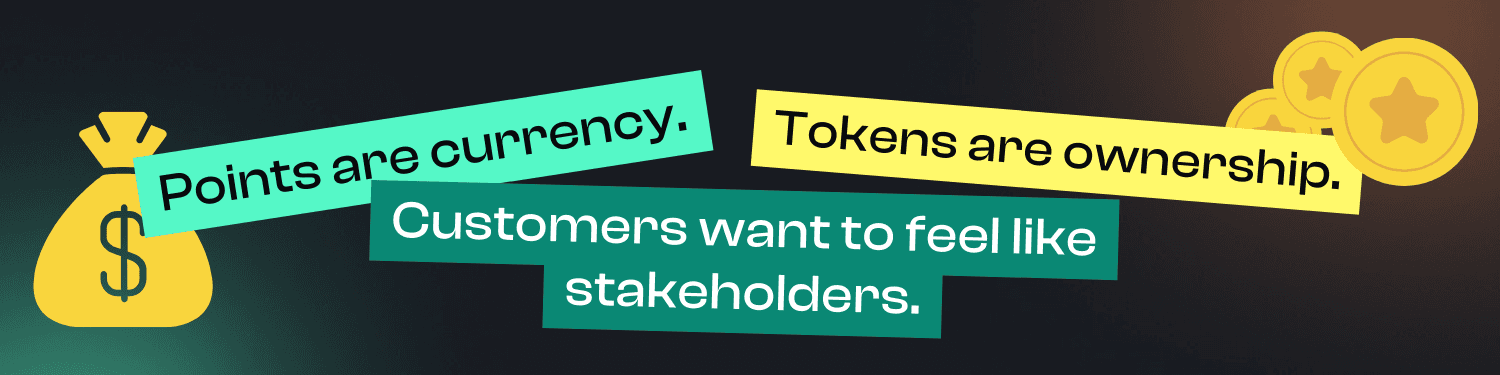
- Points are currency.
- Tokens are ownership.
- Customers want to feel like stakeholders.
They often value exclusive access, voice, and recognition more than small cashback increments.
How can brands utilise this trend?
- Create a "community insider" program where top-tier loyalists receive tokenised access to early features, exclusive spaces, or co-creation opportunities. They feel part of how the product evolves.
- Tokenise a specific reward that grants access to a VIP community channel.
Enterprises can tie this to established VIP or private banking tiers; fintechs can use it to formalise and reward their most active community members.
Delivering this level of intimacy and ownership only works if customers trust you with their data and understand the value they get back.
8. Trust-First Loyalty: Are You Using Data or Surveilling?
Trust-first loyalty is a transparent data strategy where customers explicitly grant granular permissions in exchange for clearly defined value. In an era of data breaches, trust is the ultimate loyalty currency. The era of covert tracking is over. The era of the clear "value exchange" is here.
How can brands utilise this trend?
- Give customers granular control over what data they share. Explicitly show them what they get in return: better offers, higher earn rates, tailored bundles. Privacy becomes part of the product experience.
- Create a "Data Dashboard" where users toggle specific data permissions for loyalty boosters.
For regulated incumbents,
With trust and consent in place, you can safely extend loyalty value beyond your own walls into broader ecosystems.
9. Ecosystem Partnerships: Can You Connect the Fragmented User Journey?
Ecosystem partnerships are coalition models that enable fluid point transfers and recognition across non-competing verticals, creating a "super-app" utility.
Your customers are tired of managing twenty different apps. They want a super-app experience where their banking, retail, and travel loyalty programs speak to each other. Value follows them through the day.
How can brands utilise this trend?
- Build coalition models that let customers earn in one context and redeem in another. See consistent recognition across partner brands.
- Establish a bilateral API integration with a high-frequency partner for real-time point earning and burning.
Enterprises can start with travel, grocery, or fuel; fintechs can prioritise food delivery, mobility, or subscriptions where app usage is already high.
Revenue Reality in a Loyalty-Driven World
Loyalty in 2026 isn't about stacking more points. It's about proving value that customers feel daily across their whole journey.
The winners will be the brands that treat loyalty as a product with a clear commercial mandate: drive activation, ARPU, and margin by becoming the most relevant companion in your customers' financial and everyday lives.
Want to see how these nine trends map to your loyalty program? Contact Kaizen Technology to discover your loyalty potential. Book a demo to explore how Kaizen’s WhiteLabel X can operationalise a digital loyalty program 2026 that’s built for revenue growth loyalty strategies, not just engagement.