

How to Build a Rewards Programme from Scratch: A Retailer's Practical Playbook
Why Retailers Need a Rewards Programme in 2026?
In 2026, a rewards programme is not a differentiator. It is a baseline expectation. More than 90% of companies now operate some form of loyalty scheme, and 59% of consumers say they are more likely to join a programme than they were 12 months ago, rising to 71% among Gen Z shoppers according to LoyaltyLion research. At the same time, Forrester predicts brand loyalty will drop by 25% over the same period while programme usage increases. That combination tells a clear story: customers are not becoming less loyal to loyalty programmes. They are becoming less loyal to brands that do not have them.
The commercial case is straightforward. Loyalty programme members consistently spend more, purchase more frequently, and demonstrate lower churn rates than non-members. IKEA Family members accounted for 58% of total sales after the retailer updated its programme. McDonald's loyalty members drove $30 billion in systemwide sales in their most recent reporting period. Starbucks Rewards members represent over 40% of US revenues. These are not outliers. They are the operational reality of retail in a market where acquisition costs continue to rise and first-party data is replacing third-party targeting as the foundation of marketing performance.
For retailers who have not yet launched a programme, the delay itself carries a cost. Every month without a structured loyalty mechanic is a month of customer data not collected, member behaviour not understood, and churn not identified before it becomes permanent.
Defining Your Programme Goals and Success Metrics
Every decision in programme design, from the earn rate to the technology vendor, flows from the goals set at the outset. Retailers who skip this step build programmes that are coherent as a product but incoherent as a business tool. The goal definition exercise should produce answers to four questions before any design work begins.
First, what is the primary commercial behaviour this programme needs to change? Purchase frequency is the most common target for retail programmes, but it is not the only one. Increasing average order value, reducing churn among mid-tier customers, driving cross-category trial, or generating first-party data to replace cookie-dependent targeting are all legitimate primary objectives that require different programme architectures.
Second, who is the target member? A programme designed to retain high-frequency, low-AOV customers requires different mechanics than one designed to deepen the relationship with occasional high-spend customers. Most programmes need to serve multiple segments, but the primary target should determine the structural decisions, not be an afterthought once those decisions are made.
Third, what does success look like at six months, twelve months, and three years? The metrics for each horizon are different. At six months, programme adoption rate and first redemption rate are the primary indicators. At twelve months, active member rate, purchase frequency lift, and lapse rate reduction become the relevant measures. At three years, member lifetime value compared against a non-member baseline is the clearest evidence of programme ROI.
Fourth, what is the financial envelope? A sustainable programme requires a clear answer to the cost-per-redemption that the business can support. LoyaltyLion's standard guidance for launch programmes is to set a maximum 5% return value: 5 points per £1 spent, with a £5 reward requiring 500 points. That ratio provides a manageable liability structure while still feeling meaningful to members. The right ratio for any specific business depends on margin, purchase frequency, and competitive context, but having an explicit constraint is essential. Programmes built without a cost ceiling routinely create liability they cannot commercially justify.
Choosing Your Reward Programme Model
The programme model determines the member experience, the technology requirements, the communication strategy, and the long-term competitive positioning of the scheme. Choosing based on what competitors do, or on what is technically easiest to build, rather than on what fits the customer base and commercial objective, is the most common structural mistake in new programme design.
| Model | Best Suited For | Primary Strength | Key Watch-Out |
|---|---|---|---|
| Points-based | High-frequency retail | Simplicity; immediate perceived value | Purely transactional; low emotional differentiation |
| Tiered / status | Mid-to-high AOV brands | Aspiration; drives spend concentration | Complexity cost; requires sufficient member volume to tier |
| Subscription (paid) | High repurchase frequency | Predictable revenue; high member commitment | Higher barrier to entry; value must be immediate |
| Hybrid (points + tiers) | Established retail brands | Familiar structure with aspirational layer | More complex to communicate; requires stronger tech |
| Value-based | Purpose-led brands | Deep emotional loyalty; aligns with brand values | ROI harder to attribute; longer to build |
Most retailers launching for the first time should start with a points-based structure and add tiers in a second phase once they have active member data to validate the tier thresholds. Introducing tier complexity at launch without purchase history data to set meaningful thresholds creates an experience where the tiers either feel unachievable or are reached too quickly to drive the aspirational behaviour they are designed to produce.
Designing the Earn and Burn Structure
The earn and burn structure is the mechanical heart of the programme: how members accumulate value and how they spend it. Getting both sides wrong is possible independently, and the consequences are different. A poorly calibrated earn rate produces a programme that feels slow and unrewarding. A poorly calibrated burn structure produces one where redemption is so infrequent that members forget the programme exists.
Earn mechanics
Start with purchase-based earning as the foundation. Points per pound or per transaction is the simplest structure and the easiest for members to understand at point of sale. Once the base mechanic is running, add non-purchase earning actions that drive strategic behaviours: bonus points for first app download, for completing a profile, for writing a product review, or for referring a friend. Each non-purchase earn action should map to a specific business objective. Profile completion generates richer data for personalisation. Review submissions generate social proof. Referrals reduce acquisition cost. If a non-purchase earn action cannot be connected to a measurable business outcome, it is adding liability without return.
Burn mechanics
Redemption thresholds determine how quickly members reach their first reward and therefore whether they remain engaged between joining and their first redemption event. Research consistently shows that members who reach a first redemption within 30 days of enrolment retain at significantly higher rates than those who do not. Set the first reward threshold low enough to be achievable within two or three purchases, and make the redemption experience as frictionless as possible. Auto-application of points at checkout removes a cognitive step that many members will simply never take on their own.
Reward currency naming adds perceived distinctiveness. 'Points' is functional but generic. Stars (Starbucks), Sparks (M&S), and Diamonds (other contexts) create a brand-specific vocabulary that reinforces programme identity at every communication touchpoint. A named currency also makes promotional mechanics, 'Double Stars this weekend,' feel more resonant than a generic 'Double Points' equivalent.
Naming and Branding Your Programme
The programme's name is the first thing a customer sees and the last thing they forget. A strong programme name does three things: it connects clearly to the parent brand, it suggests exclusivity or belonging, and it is memorable enough to be recalled at the point of sale without a visual prompt.
Look at how UK retailers have approached this: M&S Sparks implies something lit, exciting, special. Club New Look communicates community and exclusivity. Costa Coffee Club signals a familiar circle with access benefits. None of these names require explanation to understand the basic proposition. The name works as a brand asset alongside the mechanic itself.
Beyond the programme name, consider whether the reward currency needs its own identity. Naming the currency, whether Stars, Gems, Points, or something brand-specific, creates a vocabulary that reappears at every member touchpoint: on the digital card, in email communications, at the till, and in push notifications. That vocabulary compounds into programme recall in a way that the word 'points' alone cannot achieve.
Tone of voice for the programme should also be defined at the design stage, not at the copy stage. A premium fashion retailer's loyalty programme should feel different from a budget grocer's scheme even if the underlying mechanic is identical. The name, the currency, the tier names, and the communication style are all brand signals that members interpret continuously.
Technology Selection and Integration
Platform selection is a commitment that shapes operational agility for years. The wrong choice creates dependency on vendor development timelines for every campaign change, every rule update, and every channel integration. The right choice allows marketing teams to run, modify, and measure loyalty campaigns without raising IT projects.
| Evaluation Criterion | What to Ask the Vendor | Why It Matters |
|---|---|---|
| POS integration | Which POS systems do you connect to natively vs. via middleware? | Friction at the till destroys loyalty identification rate |
| Real-time event processing | How quickly does a transaction trigger a points update? | Delayed feedback breaks the reward loop psychology |
| No-code campaign management | Can marketing run campaigns without raising IT tickets? | Speed of iteration is a competitive advantage |
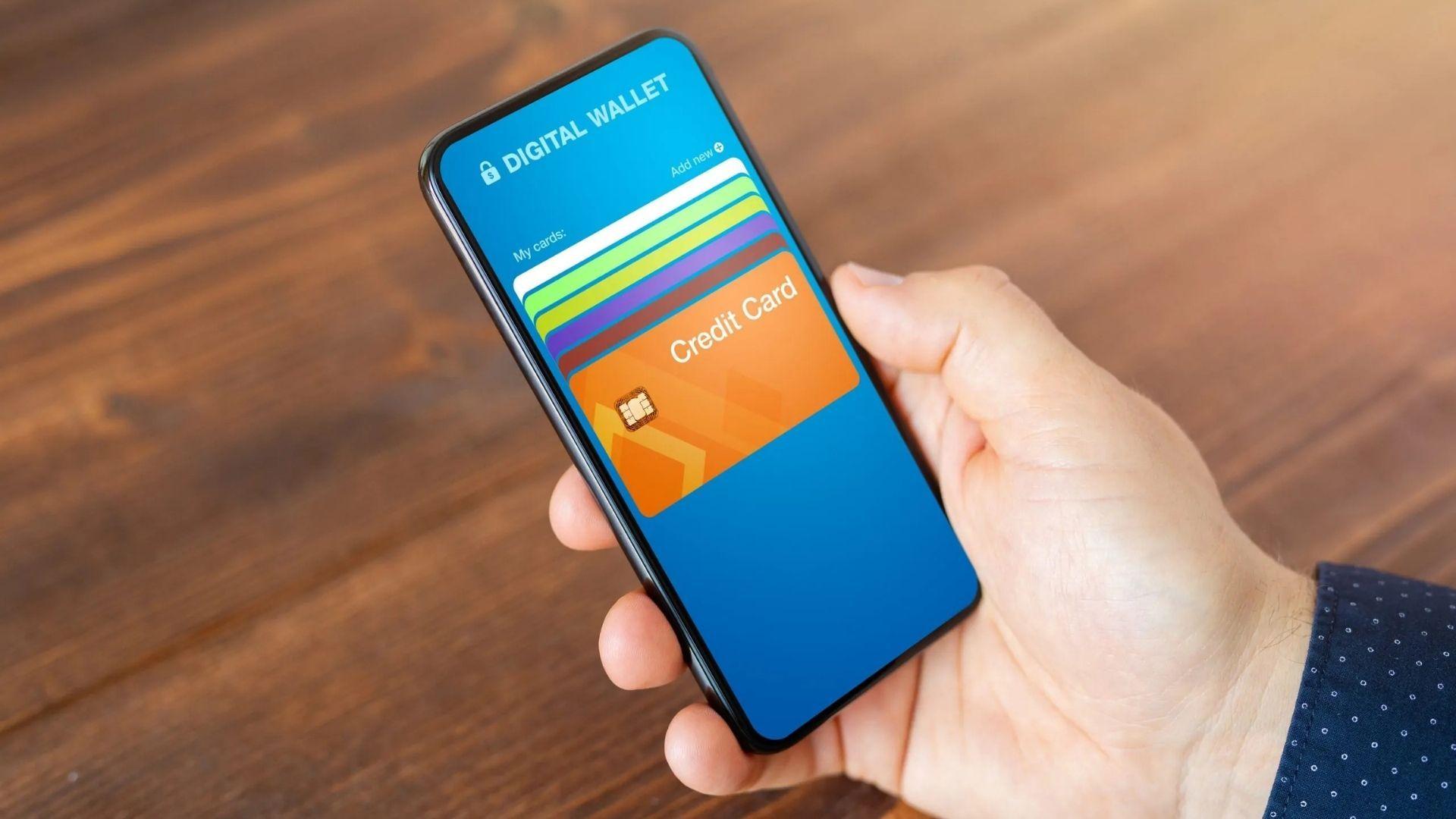
| Digital wallet support | Does the platform generate Apple and Google Wallet passes natively? | Pass adoption drives 30-40% higher redemption vs. card-only |
| Analytics and reporting | What KPIs are available out of the box vs. requiring custom build? | If you cannot measure it from day one, you cannot improve it |
| GDPR compliance | Where is member data stored and who can access it? | UK and EU programmes require documented compliance evidence |
For UK mid-market retailers, platforms such as Kaizen Loyalty offer the combination of native digital wallet support, no-code campaign management, POS integration, and UK-market compliance that enterprise vendors provide at significantly higher price points. The key principle in vendor selection is to match the platform's operational model to the team that will run it. A platform with powerful features that requires data science involvement for every campaign change will underperform a simpler one that a marketing executive can operate independently.
The most under-evaluated criterion in platform selection is iteration speed. How quickly can a campaign be changed after launch? How fast can an earn rule be adjusted if member data shows the threshold is wrong? Programmes that require three-week development cycles to modify a points multiplier are structurally slower than competitors running no-code platforms. In loyalty, the ability to test and iterate faster than competitors compounds into a measurable performance advantage within 12 months.
Soft Launch vs. Full Launch: What to Prioritise
A soft launch, running the programme with a defined early-access group before the full rollout, is one of the highest-value decisions a retailer can make and one of the most commonly skipped. The commercial logic is straightforward: the early group identifies programme design problems before they are experienced at scale.
New Look soft-launched Club New Look and attracted approximately 400,000 sign-ups before the public rollout, generating both an engaged founding member base and a body of feedback that informed the full launch experience. That approach is repeatable at any scale. An early-access cohort of 500 to 2,000 of the brand's highest-value existing customers typically provides enough behavioural data within four to six weeks to validate earn and burn calibration, identify friction in the redemption journey, and surface any technical issues in the POS or digital wallet integration before they affect the full member base.
During a soft launch, the priorities in order are: confirm that points are awarding correctly against every earn action; confirm that redemption works at the till and via the digital card; confirm that the welcome communication sequence is generating first redemptions within 30 days; and capture qualitative feedback from early members on the programme name, the clarity of the mechanic, and the perceived value of the reward structure.
Full launch activation should follow a multi-channel communication plan covering email, SMS, in-store point of sale, staff briefing, and social channels in a coordinated sequence over the first two weeks. Staff are the most under-utilised launch channel in retail loyalty. A till team that can briefly explain the programme and prompt sign-up at checkout will consistently outperform any digital-only awareness campaign in first-day enrolment numbers.
Onboarding Your First Members
The member onboarding sequence is the single highest-leverage communications investment in a loyalty programme's lifecycle. Members acquired in the first month set the behavioural baseline that the rest of the programme is measured against. Getting them to their first redemption within 30 days is the clearest early predictor of 12-month retention.
A structured onboarding sequence for new loyalty members should consist of no more than three to four communications over the first ten to fourteen days. The first message, sent immediately on enrolment, confirms membership, states the welcome points or discount clearly, and explains the earn mechanic in one sentence. The second message, sent two to three days later, shows the member their current balance and the distance to their first reward. The third, sent before day ten, introduces a time-limited first challenge or bonus event that creates urgency without pressure.
Each communication should have one clear action and one clear benefit statement. Welcome sequences that try to explain the full programme, including tier structure, non-purchase earn, referral mechanics, and reward catalogue, in a single email consistently underperform those that introduce one element at a time. Members do not need to understand everything in week one. They need to feel rewarded in week one. Comprehension deepens with engagement; it does not precede it.
At the physical point of sale, the onboarding moment is the second visit, not the first. A member who scanned at their joining transaction and saw no visible sign of progress on the second visit has already begun to disengage. Ensuring that the digital card or app shows visible point accumulation by the second transaction, and that staff are prompted to mention it, is the operational detail that makes the difference between a member who becomes habitual and one who forgets they joined.
Programme Iteration: How to Improve After Launch
The most commercially successful loyalty programmes share one characteristic that has nothing to do with their launch design: they are treated as living products, not standing promotions. Tesco Clubcard has been running since 1995. Its current form bears almost no structural resemblance to its original incarnation. That continuous evolution, not the original design, is what has sustained its commercial relevance for three decades.
Iteration requires a measurement framework that is in place before launch, not assembled retrospectively. The four metrics that should be monitored from week one are: programme adoption rate (enrolled as a percentage of transactions), active member rate (members transacting within 90 days), first redemption rate (members reaching a first reward within 30 days), and lapse rate by cohort (the rate at which specific joining cohorts become inactive over time). Each of these metrics has a diagnostic function: adoption rate surfaces communication and enrolment friction; active rate surfaces mechanic and reward relevance; first redemption rate surfaces earn calibration; cohort lapse rate surfaces long-term engagement design.
Improvement decisions should be evidence-based and incremental. Changing the earn rate, the redemption threshold, the reward catalogue, and the communication cadence simultaneously makes it impossible to know which change produced which result. Run one change at a time, measure for four to six weeks, and carry the learning into the next iteration. This discipline compounds into a programme that knows its audience's incentive sensitivities, timing preferences, and reward motivations with a precision that no competitor who skips the iteration discipline can match.
Finally, plan the programme's evolution roadmap before the launch, not after. The features that are out of scope for a version one launch, gamification mechanics, partner reward integrations, sustainability-linked earning, or a premium paid tier, should already be scheduled for version two evaluation. Knowing what comes next prevents the common failure mode where a programme launches, generates initial excitement, and then stagnates because no one planned what happens in month seven.