
Retail Innovation in 2026: How Forward-Thinking Retailers Are Reinventing the Loyalty Experience
What Does Retail Innovation Mean in 2026?
Retail innovation in 2026 is no longer principally about technology for its own sake. The retailers gaining ground are those applying new capabilities to solve specific commercial problems: reducing friction in the purchase journey, making loyalty rewards feel genuinely relevant, connecting physical and digital touchpoints into a single coherent experience, and giving customers a reason to return that goes beyond a discount.
The context matters. Ecommerce is expected to approach $7.5 to $8 trillion globally by 2026. Consumer expectations, shaped by years of frictionless digital experiences, have transferred to physical retail. Shoppers walk into stores carrying the same expectation of personalisation, speed, and relevance they have when they open an app. Retailers who cannot meet that expectation at the physical point of sale are losing ground regardless of how strong their online proposition is.
For loyalty specifically, the shift is away from discount-led programme design and toward experience-led relevance. Research from the Retail Technology Show in 2026 found that 55% of UK shoppers want retailers to do more with their loyalty programmes than simply offer discounts. Seamless checkout integration, instantaneous rewards, and access to multi-brand redemption topped the list of improvements consumers asked for. That is the commercial brief facing every loyalty professional working in retail today.
Top Retail Innovation Trends
AI-Powered Personalisation
Artificial intelligence has moved from a pilot capability to an operational expectation in retail loyalty. The shift is qualitative as well as quantitative: in 2026, AI is not simply generating product recommendations based on past purchases. It is predicting intent, adjusting offer mechanics in real time based on individual behaviour patterns, and personalising the structure of loyalty challenges and rewards at an individual member level.
The commercial case is well-established. Retailers using AI-driven personalisation in loyalty contexts report up to 35% higher redemption rates compared with those relying on broad segmentation. Tesco's use of purchase data from its Clubcard base to generate personalised app coupons is a mature example; M&S has deployed an AI style quiz that has assisted over 450,000 users, with 80% of its product descriptions now AI-generated. By 2026, 80% of retail executives expect their organisations to have adopted AI automation in some form. The constraint is no longer access to the technology but the data infrastructure required to make it effective.
For loyalty programmes, AI personalisation means moving beyond 'segment of one' as an aspiration and treating it as the operational baseline. Programmes that still send the same bonus points email to their entire active member base in 2026 are not competing on the same terms as those using behavioural prediction to decide who receives what offer, on which channel, at which point in their purchase cycle.
Frictionless Checkout and Pay
Checkout friction remains one of the most commercially damaging points in the retail experience. Queues, card reader failures, and the disconnect between loyalty identification and payment have cost retailers demonstrable conversion at the point where purchase intent is highest. The innovation response in 2026 spans several formats: computer vision-enabled checkout that identifies items placed in a basket without scanning, biometric authentication replacing PIN entry, and mobile wallet integration that captures loyalty identification at the point of contactless payment automatically.
Research from RTS 2026 found that seamless integration of loyalty programmes at the checkout was the single most requested improvement among UK shoppers surveyed, cited by 41% of respondents. The operational gap between knowing a customer via their loyalty data and being able to serve them seamlessly at the physical till is one of the clearest infrastructure problems in UK retail. Retailers closing that gap are seeing both higher loyalty identification rates at checkout and higher satisfaction scores among members.
For loyalty professionals, frictionless checkout is not a payments problem. It is a data problem. The loyalty card that cannot be presented at the point of payment because the customer forgot it, or the app that takes too long to load at the till, produces a broken engagement loop at the precise moment the customer is most primed to feel rewarded.
Experiential Retail
Physical retail is being repositioned not as a distribution channel but as a media channel: a space where brands build relationships, create memories, and give customers something they cannot get from a product page. The movement toward experiential retail reflects the reality that online shopping has absorbed the transactional logic of retail. Stores that remain purely transactional are competing on a dimension where they will always lose to digital convenience.
John Lewis has committed an £800 million investment plan that includes refurbishing its Oxford Street flagship to increase the proportion of floor space dedicated to events, services, and experiences. Across the UK high street, retailers are introducing personal styling consultations, in-store workshops, early product access events for loyalty members, and pop-up activations that use physical space to generate social sharing and organic advocacy.
The loyalty connection is direct. Experiential rewards, exclusive event access for Gold members, or members-only in-store sessions, deliver perceived value that a discount cannot replicate. Bond research found that special access and personal experiences have become the top driver of perceived loyalty programme value. Retailers embedding experiential rewards into tier benefits are building a loyalty proposition that is structurally harder for a competitor to undercut on price.
Sustainable Loyalty
Sustainability has moved from a brand communications priority to a tangible product design constraint in loyalty. UK consumers, particularly under 35s, increasingly factor environmental credentials into their purchase decisions. Retailers that structure loyalty rewards around sustainable behaviours are aligning programme design with what a significant segment of their most valuable members actually care about.
Costa Coffee Club's decision to halve the stamp requirement for members who use a reusable cup is a clean example of how a simple mechanic can change behaviour at scale while reinforcing brand positioning. H&M rewards members for bringing their own bags, using the garment collection programme, and choosing climate-smart delivery. Boots and M&S are linking specific product categories or sourcing choices to bonus earn mechanics.
The business case for sustainable loyalty is not simply about brand values. Members who engage with sustainability-linked rewards tend to demonstrate higher programme affinity and stronger retention than those engaged only through transactional earn and burn mechanics. They are, in many cases, the members a programme most wants to keep.
Voice and Conversational Commerce
Conversational commerce, encompassing voice interfaces, AI chat assistants embedded in retail apps, and social commerce formats, is reshaping the discovery and consideration stage of the purchase journey. Retail analysts project that one in four shoppers will use AI-powered chatbots when shopping in 2026. The retailers investing in this space are those who recognise that the path from product discovery to purchase is being shortened dramatically when the interface is conversational rather than navigational.
For loyalty programmes, the implication is around accessibility and engagement. A member who can check their points balance, redeem a reward, or activate a challenge through a voice interface or chat function within a retail app is experiencing loyalty as a natural extension of shopping, not as a separate system they have to consciously log into. Conversational touchpoints also generate behavioural data, revealing what members are searching for, what they are considering, and where they abandon intent. That data feeds back into AI personalisation and makes subsequent campaign targeting sharper.
How Innovation Is Reshaping Loyalty Programme Design
The cumulative effect of these trends is a fundamental redesign of what a loyalty programme is expected to do. The traditional model, earn points on purchases, redeem for discounts, and communicate by email, is not broken. But it is no longer sufficient to differentiate a programme or to retain members whose expectations have been reset by more sophisticated experiences elsewhere.
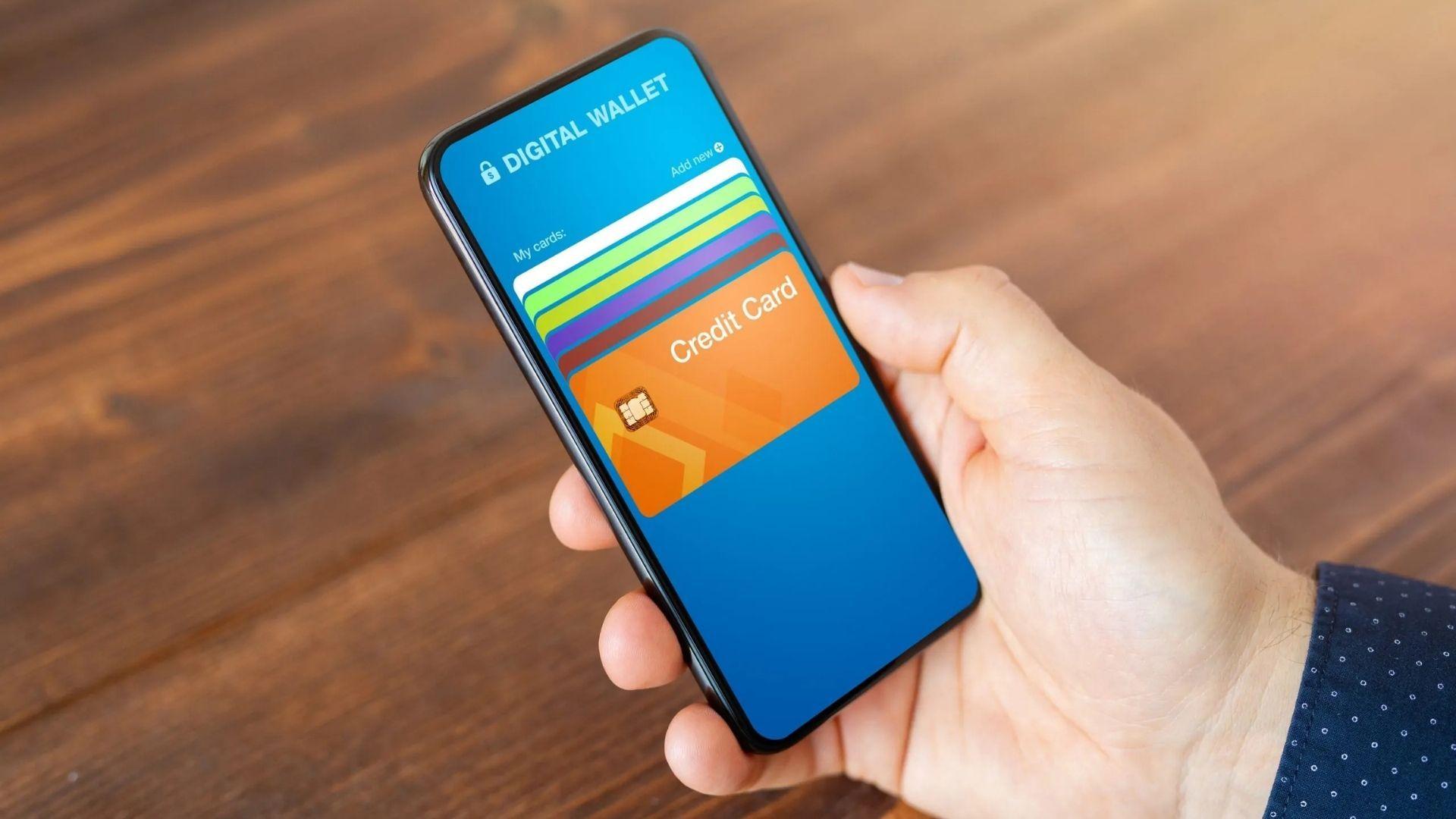
The programme architecture being built by the most progressive retailers in 2026 shares several common characteristics. First, the loyalty layer is embedded at every touchpoint rather than existing as a separate system. Points accrue when a member taps to pay, not only when they present a card. Challenges surface in the same app interface used for mobile ordering. Tier status is visible on the digital wallet card on the lock screen, not only in a portal that requires a login.
Second, the reward mix is broadening beyond discounts. Experiential benefits, sustainability rewards, early product access, personalised offers calibrated to individual category history, and gamified mechanics that give members a reason to engage between purchase occasions are all becoming standard components rather than premium additions.
55% of UK shoppers surveyed by RTS in 2026 want retailers to do more with their loyalty programmes than simply offer discounts. Six in ten report a lack of differentiation within existing loyalty offerings. That is not a marketing problem. It is a product design problem. The programmes that will retain and grow members through 2026 and beyond are those treating loyalty design with the same rigour applied to any other product experience.
Third, the data relationship between loyalty and the rest of the business is becoming bidirectional. Loyalty data informs buying decisions, store layout, product development, and pricing strategy. Product and operational data feeds back into loyalty personalisation. The programme is no longer a discrete marketing tool; it is a data infrastructure layer that the entire retail operation depends on.
UK Retailers Leading the Innovation Charge
The UK loyalty market is projected to grow at a 12.2% CAGR between 2025 and 2029, reaching $4.06 billion by the end of that period. The retailers generating that growth are those treating programme innovation as a continuous operational commitment rather than a periodic relaunch exercise.
| Retailer | Innovation Focus | Loyalty Application | Scale / Outcome |
|---|---|---|---|
| M&S (Sparks) | Digital wallet + AI personalisation | Money rewards, personalised offers, digital Sparks wallet | 17M+ members; £200M-£250M tech investment FY25-26 |
| Tesco Clubcard | AI-driven data analytics | Personalised app coupons, Clubcard Prices | 21M+ active members; up to £360 annual grocery saving |
| Costa Coffee Club | Sustainable loyalty mechanics | Halved stamp requirement for reusable cup users | Behaviour change + measurable sustainability credential |
| Nectar (Sainsbury's) | Gamification + coalition model | 'Swipe to Win' digital mechanic, multi-brand redemption | Cross-brand engagement; fresh programme interaction |
| John Lewis | Experiential retail investment | In-store experience events, exclusive product access | £800M store investment plan inc. Oxford St flagship |
What distinguishes these retailers is not the novelty of individual features but the consistency with which innovation is embedded into programme operations. Tesco's Clubcard personalisation is not a campaign. It is how the programme works every day for every member. M&S's Sparks digital wallet was not a technical upgrade. It was a redesign of the member experience built around what customers said they needed. That distinction between episodic innovation and structural innovation is what separates programmes that maintain relevance over years from those that generate brief engagement spikes.
Building an Innovation-First Loyalty Strategy
An innovation-first loyalty strategy does not require a complete programme rebuild or an enterprise technology budget. It requires a framework for evaluating which innovations are worth pursuing, a process for piloting before scaling, and the data infrastructure to measure what works.
Start with the friction audit
Before introducing new technology, identify where the current programme experience breaks down. Where do members fail to redeem? Where does loyalty identification drop at checkout? Where does the mobile experience cause abandonment? Fixing existing friction delivers faster commercial return than adding new features on top of a broken foundation.
Prioritise data over features
Every innovation in the list above, AI personalisation, frictionless checkout, conversational commerce, depends on clean, connected customer data. A programme with fragmented data across POS, CRM, and loyalty platform cannot personalise effectively regardless of how sophisticated the AI layer is. The data infrastructure investment precedes the feature investment.
Pilot with a defined segment
Test innovations with a defined member segment before broad rollout. A sustainability reward mechanic piloted with members who have demonstrated eco-conscious purchasing behaviour generates cleaner results than a blanket launch. Tier unlock nudges tested on members who are 10% away from a threshold produce sharper attribution data than a full-programme activation. Disciplined pilots produce actionable data; broad launches produce averages that obscure what is actually working.
Connect innovation to commercial outcomes
Every innovation initiative should map directly to a measurable outcome: redemption rate lift, purchase frequency increase, lapse rate reduction, average order value growth. Innovations that cannot be connected to a commercial metric before launch cannot be evaluated after it. For loyalty professionals making the case for innovation investment, the commercial linkage is also the justification language that resonates with finance and commercial leadership.
Treat the programme as a product
The retailers leading on loyalty innovation think of their programme the way a technology company thinks of a product: built on user research, iterated based on behaviour data, released in versions, and owned by a team with a clear mandate to improve it continuously. That mindset, more than any specific technology, is what produces the compounding advantage seen in mature programmes like Tesco Clubcard, which has delivered commercial returns for over two decades because it has been treated as a living product rather than a standing promotional mechanic.