
What is a Loyalty Card?
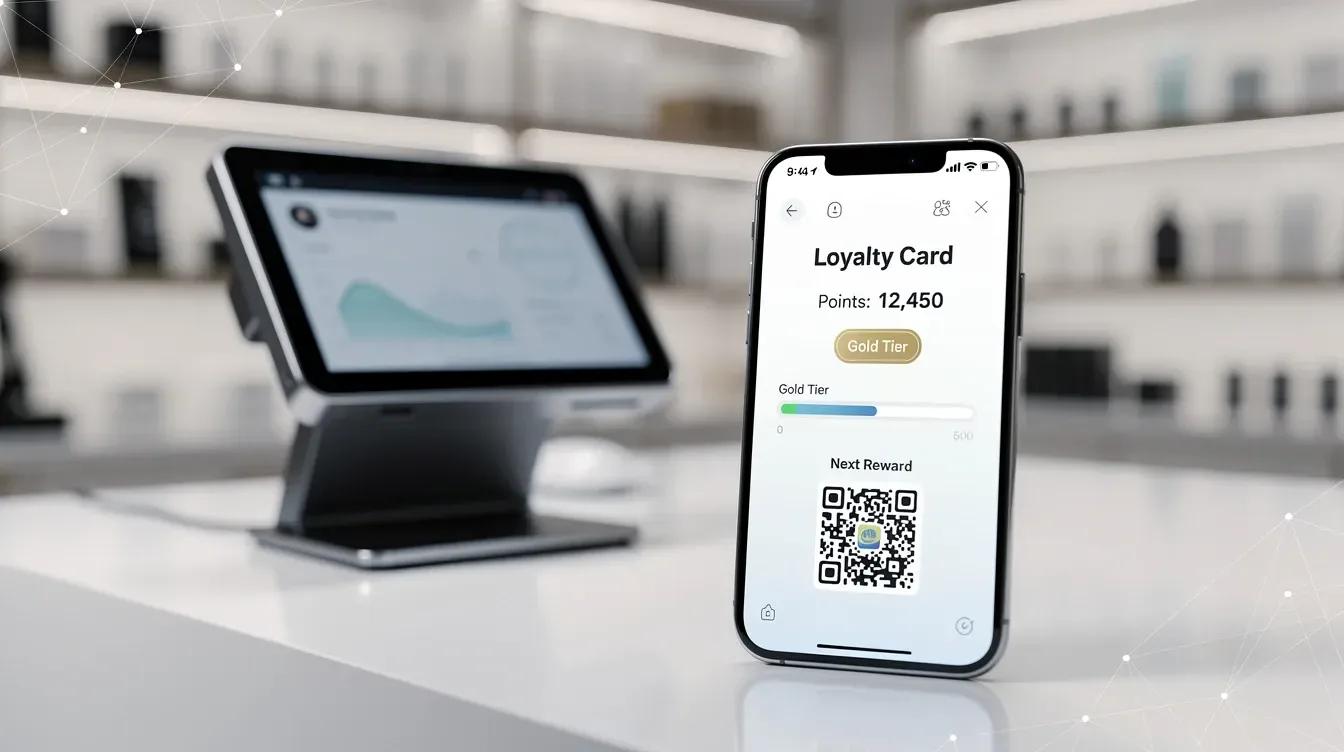
A loyalty card is a physical or digital credential issued by a business to enrolled members of its loyalty program. It identifies the cardholder within the program's system and serves as the mechanism through which purchases are recorded, points are accumulated, and rewards are tracked or redeemed. In its original form, the loyalty card was a plastic card resembling a payment card, swiped or scanned at the point of sale. In modern program infrastructure, it is more commonly a digital pass stored in a mobile wallet, a barcode within a brand's app, or a QR code generated at checkout.
Loyalty cards are the customer-facing element of a broader loyalty program architecture. The card itself does not govern the rules of the program; it is the identifier that connects a customer's transactions to their profile in the loyalty platform. The underlying platform handles point calculation, tier assignment, reward eligibility, and behavioral segmentation.
Types of Loyalty Cards
| Type | Mechanism | Common Use Case |
| Stamp card | Manual or digital stamp per visit or purchase | Cafes, quick-service restaurants |
| Points card | Points credited per transaction value | Retail, grocery, pharmacy |
| Tiered membership card | Card level reflects cumulative spend or status | Airlines, hotels, premium retail |
| Co-branded payment card | Points earned on all card spend, not just in-store | Financial services, travel programs |
| Digital wallet pass | Apple Wallet or Google Wallet card with live data sync | Retail, QSR, transport |
How Loyalty Cards Work
When a customer makes a qualifying purchase, the loyalty card identifier, whether scanned as a barcode, tapped via NFC, or entered as a membership number, is passed to the point-of-sale system. The POS transmits the transaction data to the loyalty platform, which applies the configured earning logic: awarding points, incrementing a stamp count, or recording spend toward a tier threshold.
The platform updates the member's balance in real time and, where applicable, triggers automated communications such as a reward confirmation message or a tier upgrade notification. At redemption, the reverse process occurs: the member presents their card or digital pass, selects a reward or applies a discount, and the platform deducts the corresponding points or stamps from their balance.
Modern digital loyalty cards are live documents. A wallet pass updates automatically when the member's point balance changes, a reward expires, or their tier status is modified, without requiring the customer to open the brand's app. This persistent visibility keeps the program present in the customer's awareness between purchases.
Benefits of Loyalty Cards for Businesses
- Customer identification: every scanned card converts an anonymous transaction into an identified purchase. This data supports segmentation, behavioral analysis, and personalized marketing that would otherwise be impossible.
- Purchase frequency uplift: members enrolled in a loyalty program visit more frequently and spend more per transaction than non-members. Top loyalty programs report a 15 to 25 percent annual revenue increase from their active member base.
- Zero-party and first-party data capture: loyalty card enrollment collects declared preferences and generates behavioral purchase data, reducing dependence on third-party data sources for audience targeting.
- Churn reduction: the point balance and tier status held by a member represent switching costs. Customers with accumulated rewards are significantly less likely to defect to a competitor without a direct financial incentive to do so.
Benefits of Loyalty Cards for Customers
- Tangible reward value: accumulated points, stamps, or status translate into free products, discounts, early access, or exclusive experiences with measurable monetary value.
- Recognition and status: tiered programs reward the most engaged customers with visible status markers and elevated service levels that reinforce their relationship with the brand.
- Personalized offers: loyalty data enables businesses to deliver promotions relevant to the individual member's purchase history rather than generic mass communications.
- Convenience: digital loyalty cards remove the need to carry physical plastic. A wallet pass or in-app card is always available at the point of sale without additional friction.
Loyalty Cards vs. Digital Loyalty Programs
The loyalty card is a component of a loyalty program, not the program itself. A physical card without a connected platform cannot personalize rewards, trigger automated communications, or produce the behavioral data that makes loyalty programs commercially valuable. Conversely, a digital loyalty program can operate without a physical card altogether, using app-based identifiers, email addresses, or payment-linked accounts as the member identifier.
The distinction matters for program design. Businesses that issue physical cards incur production and distribution costs and face the practical problem of customers failing to carry them. Businesses that migrate to digital-only identification via QR codes, wallet passes, or payment-linked programs reduce friction at the point of enrollment and increase the proportion of transactions that are captured against a member profile. 59 percent of consumers prefer to interact with loyalty programs via mobile apps, reflecting the accelerating preference for digital-first program access.
Examples of Successful Loyalty Card Programs
- Starbucks Rewards: operates as a digital-first program with no physical card requirement. Members earn Stars through the app or a registered Starbucks Card, with 34.6 million active members in the US as of Q1 2025. Loyalty members account for 41 percent of US sales.
- Kroger Plus: a points card and digital account combination active since 2003 across Kroger's supermarket network. As of 2025, 95 percent of Kroger customers are enrolled in the program, making it one of the broadest penetration rates of any retail loyalty scheme.
- H&M Membership: a tiered digital membership with over 120 million members across 26 markets. The program combines points on purchases with sustainability incentives, awarding points for clothing recycling and eco-friendly shopping behaviors alongside standard transactional rewards.
- Hilton Honors: a tier-based hotel loyalty program launched in 1987 and now one of the largest in hospitality. Members earn points per stay across the Hilton portfolio and redeem across free nights, room upgrades, and partner experiences, with status tracked entirely through a digital member profile.