
What is a Payment Gateway?
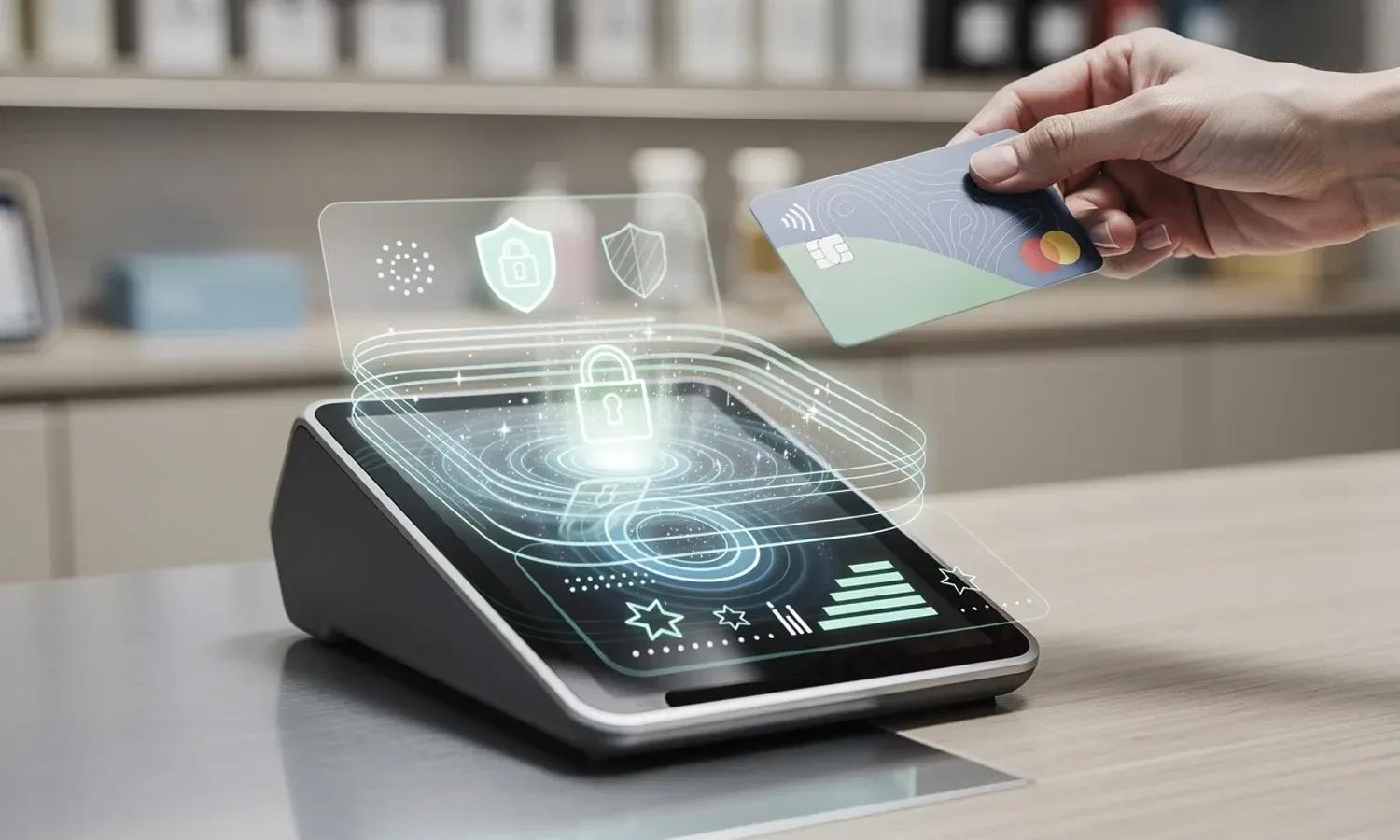
A payment gateway is a technology service that securely captures, encrypts, and transmits payment data between a customer, a merchant, and their respective financial institutions during a transaction. It functions as the intermediary that connects the checkout interface, whether on a website, mobile application, or point-of-sale terminal, to the payment processing infrastructure that validates and authorizes the transaction.
In practical terms, a payment gateway performs the same function as a physical card terminal at a retail counter, but in a digital environment. When a customer enters their card details at an online checkout, the gateway encrypts that data, routes it to the relevant parties for authorization, and returns an approval or decline response to the merchant in real time. The entire sequence typically completes within two to three seconds.
For businesses operating loyalty programs with payment-linked earning mechanics, the payment gateway is also the point at which member identification and reward calculation must be triggered. Integrating loyalty logic with the payment gateway enables automatic point accumulation per qualifying transaction without requiring the customer to present a separate loyalty card.
How Does a Payment Gateway Work?
The transaction flow through a payment gateway involves five sequential steps:
- Data capture and encryption: the customer submits payment details at checkout. The gateway encrypts the data using SSL or TLS protocols and tokenizes the card number, replacing it with a unique identifier that cannot be reverse-engineered. The original card data is never stored by the merchant.
- Authorization request: the encrypted transaction data is forwarded to the merchant's acquiring bank, which passes it to the card network (Visa, Mastercard, or similar) and on to the customer's issuing bank for validation.
- Issuer response: the issuing bank verifies available funds, checks for fraud flags, and returns an approval or decline code through the same chain.
- Response delivery: the gateway receives the issuer's response and communicates the outcome to the merchant's checkout interface, allowing the transaction to complete or prompting the customer to use an alternative payment method.
- Settlement: approved transactions are batched and submitted by the merchant to their acquiring bank, typically at the end of each business day. The acquiring bank initiates settlement with the issuing bank, and funds are transferred to the merchant account within one to two business days in most markets.
Types of Payment Gateways
| Type | How It Works | Best Suited For |
| Hosted | Customer is redirected to the payment provider's secure page to enter card details | Small to mid-size merchants seeking rapid deployment and reduced compliance burden |
| Self-hosted | Card details are collected directly on the merchant's site and submitted to the gateway | Merchants wanting full control of the checkout UI, accepting responsibility for PCI scope |
| API-hosted | Payment data is captured and processed entirely via API calls within the merchant's application | Enterprise platforms and SaaS businesses requiring deep customization and mobile optimization |
| Local bank integration | Transaction data is routed to a regional bank that processes the payment using local payment methods | Businesses with significant transaction volume in markets with dominant local payment rails |
Payment Gateway vs. Payment Processor
These two terms are frequently confused because some providers offer both services under a single platform, but they perform distinct functions in the payment chain.
The payment gateway handles the customer-facing and security layer: it captures payment details, encrypts and tokenizes sensitive data, and communicates the authorization decision back to the merchant. The payment processor handles the institutional layer: it moves the transaction data between the acquiring bank, the card network, and the issuing bank, and manages the settlement of funds. In simple terms, the gateway is the secure communication interface; the processor is the financial routing engine that moves money between accounts.
Some providers, such as Stripe and Square, combine both functions in a single integrated service, which simplifies integration for merchants. In enterprise environments, the gateway and processor may be separate vendors, requiring explicit integration between the two systems and distinct contractual relationships.
Key Features to Look for in a Payment Gateway
- PCI DSS compliance: the gateway must be certified at the appropriate PCI DSS level and ideally reduce the merchant's own PCI scope through tokenization and hosted field components.
- Encryption and tokenization: card data should never be transmitted or stored in its raw form. Look for gateways that implement tokenization as a default, not an optional add-on.
- Fraud detection and 3DS support: real-time fraud scoring, velocity checks, address verification (AVS), CVV validation, and support for 3D Secure 2.0 authentication are standard requirements for any card-not-present environment.
- Multi-currency and local payment method support: for businesses operating across geographies, the gateway must support the currencies and payment rails relevant to each market, including digital wallets, bank transfers, and buy-now-pay-later options where appropriate.
- Recurring billing and subscription support: loyalty platforms and SaaS businesses require the ability to process recurring charges against stored payment credentials without requiring the customer to re-enter card details at each billing cycle.
- Settlement speed and reporting: evaluate the gateway's settlement timeline, whether funds are settled net or gross of fees, and the quality of the transaction reporting and reconciliation data available to finance teams.
Benefits of Using a Payment Gateway
- Security and fraud liability reduction: by handling encryption and tokenization, a PCI-compliant gateway significantly reduces the merchant's exposure to data breach liability and the cost of maintaining their own secure payment infrastructure.
- Faster checkout conversion: a well-integrated gateway minimizes friction at the most critical point in the purchase journey. Slow or disrupted checkout flows are a primary driver of cart abandonment, and gateway performance directly affects conversion rates.
- Access to global payment methods: a single gateway integration can provide access to dozens of payment methods across multiple markets, enabling international expansion without separate integrations for each payment rail.
- Operational efficiency: centralized transaction reporting, automated reconciliation, and standardized dispute management through a single gateway reduces the manual overhead carried by finance and operations teams.
- Loyalty and CRM integration: payment gateways that expose webhook events or transaction APIs enable real-time integration with loyalty platforms, allowing member identification, point calculation, and reward fulfillment to be triggered automatically at the moment of transaction, without friction for the customer.