

What is Inbound Marketing?
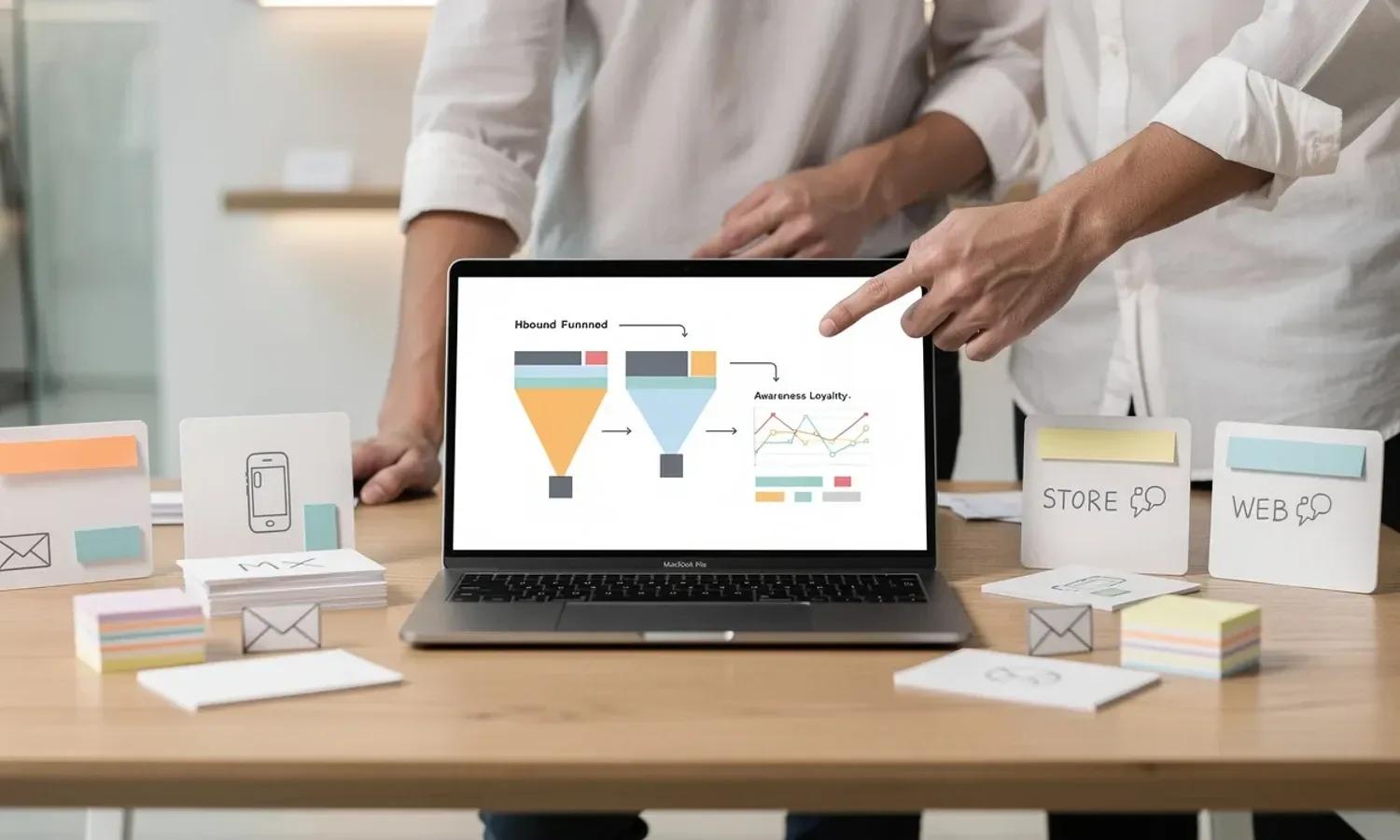
Inbound marketing is a strategic approach that attracts potential customers by creating and distributing content that addresses their needs at each stage of the buying process. Rather than interrupting an audience with unsolicited messages, inbound marketing positions a brand as a useful resource that prospects actively seek out.
The methodology operates across four stages: attracting the right visitors through search-optimized content and social distribution, converting those visitors into leads through gated assets or contact capture, closing leads into customers through targeted nurture sequences and sales alignment, and delighting existing customers with post-purchase content that drives retention and referrals. Each stage requires a distinct set of tactics and measurement criteria, but all four rely on a shared understanding of who the target buyer is and what information that buyer needs at a given point in their decision process.
Inbound vs. Outbound Marketing
Outbound marketing pushes a message to a broad audience regardless of their current intent or interest. Display advertising, cold email outreach, trade show sponsorships, and telemarketing are all outbound tactics. They generate awareness efficiently at scale but typically produce lower conversion rates because the audience has not yet signaled a need.
Inbound marketing operates on pull mechanics. Prospects encounter content because they are actively searching for a solution, which means they arrive with established intent. The practical implication is that inbound leads tend to require less qualification effort and convert at higher rates over the course of a longer engagement cycle. However, inbound takes more time to build than outbound. Organic search rankings, content libraries, and email subscriber lists accumulate over months or years, not days.
| Inbound Marketing | Outbound Marketing |
| Audience seeks out the brand | Brand reaches out to the audience |
| Permission-based (opt-in) | Interruption-based (opt-out) |
| Lower cost per lead over time | Higher cost per lead, predictable volume |
| Longer to build, compounds over time | Faster to deploy, stops when spend stops |
| SEO, content, email nurture, webinars | Cold outreach, paid ads, direct mail |
Key Components of Inbound Marketing
A functional inbound program requires several interconnected capabilities working in sequence:
- Content marketing: the production of blog posts, guides, white papers, case studies, and video that map to buyer questions at awareness, consideration, and decision stages.
- Search engine optimization (SEO): the technical and editorial work that makes content discoverable through organic search. Without SEO, content remains invisible regardless of its quality.
- Lead capture and conversion: landing pages, gated assets, and forms that exchange high-value content for contact details, converting anonymous visitors into identifiable leads.
- Email nurture: automated sequences that deliver relevant content to leads based on their behavior and stage in the funnel, advancing them toward a sales conversation at an appropriate pace.
- CRM and marketing automation: the infrastructure that tracks lead activity, manages segmentation, triggers workflows, and passes qualified leads to sales with full behavioral context.
Benefits of Inbound Marketing
Inbound marketing produces three structural advantages that outbound tactics cannot replicate over time. First, the content and search rankings built through an inbound program continue to generate traffic and leads after the initial production cost is absorbed. A well-optimized article published today may generate qualified leads for three to five years. Second, inbound content builds category authority. Brands that consistently publish accurate, detailed information on a topic become the reference points that buyers trust when evaluating vendors. Third, inbound programs produce richer lead data. Because prospects self-select based on content they consume, sales teams receive behavioral context, not just contact details, which shortens qualification and improves the quality of initial sales conversations.
For B2B SaaS and loyalty platform vendors, where buying cycles are long and multiple stakeholders are involved, these advantages are compounding. Decision-makers who encountered a vendor's content early in their research are significantly more likely to include that vendor in a formal evaluation than those who encountered the brand only through paid advertising.
How to Build an Inbound Marketing Strategy
A structured inbound strategy begins with defining the target buyer in operational terms. This means documenting the job title, primary business challenges, evaluation criteria, objections, and information sources for each decision-maker involved in the purchase. Vague audience definitions produce content that fails to rank or convert.
Map content to buying stage. Awareness-stage content addresses broad problem recognition and should target informational keywords with measurable search volume. Consideration-stage content compares approaches or categories and targets more specific queries. Decision-stage content addresses vendor-specific questions, proof requirements, and risk concerns.
Build the conversion infrastructure before scaling content production. Landing pages, lead capture forms, and automated nurture sequences must be in place before traffic is generated. Publishing content without a mechanism to capture and progress leads wastes the acquisition investment.
Measure lead quality, not just volume. Track marketing-qualified lead (MQL) to sales-qualified lead (SQL) conversion rates by content source to identify which topics and formats attract buyers, not just readers.
Inbound Marketing Examples
A loyalty platform vendor publishes a detailed guide on selecting a points-based rewards program for retail chains. The guide ranks for target keywords, generates downloads from retail operations managers, and triggers a nurture sequence that delivers relevant case studies and a product comparison sheet over four weeks. The sequence ends with an invitation to a product walkthrough.
A B2B SaaS company hosts a recurring webinar series on loyalty program benchmarks, capturing registrant data from prospects who are actively researching vendors. The webinar recording is gated behind a form and promoted through organic search and LinkedIn, extending the content's lead-generation lifespan beyond the live event date.
A retail brand publishes an interactive loyalty ROI calculator on its website. Visitors input their current program metrics and receive a projected return estimate based on industry benchmarks. The calculator captures contact details in exchange for the detailed report, qualifying prospects by demonstrated commercial intent before they reach the sales team.