
Account-Based Marketing for Fintech: How to Combine ABM with Loyalty for B2B Growth?
Fintech companies operate in a market where sales cycles are long, buying committees are large, and the cost of losing an enterprise account is disproportionate to the cost of acquiring one. Traditional lead generation, built around volume and funnel conversion rates, is poorly suited to this commercial reality. Account-based marketing has emerged as the structural alternative: a model in which marketing and sales resources are concentrated on a defined set of high-value accounts, each treated as an individual market with its own stakeholders, priorities, and engagement cadence.
When combined with a loyalty and retention layer, ABM moves beyond new account acquisition and becomes a full-lifecycle growth strategy. This guide explains how fintech companies can build that combination in practice.
What is Account-Based Marketing (ABM)?
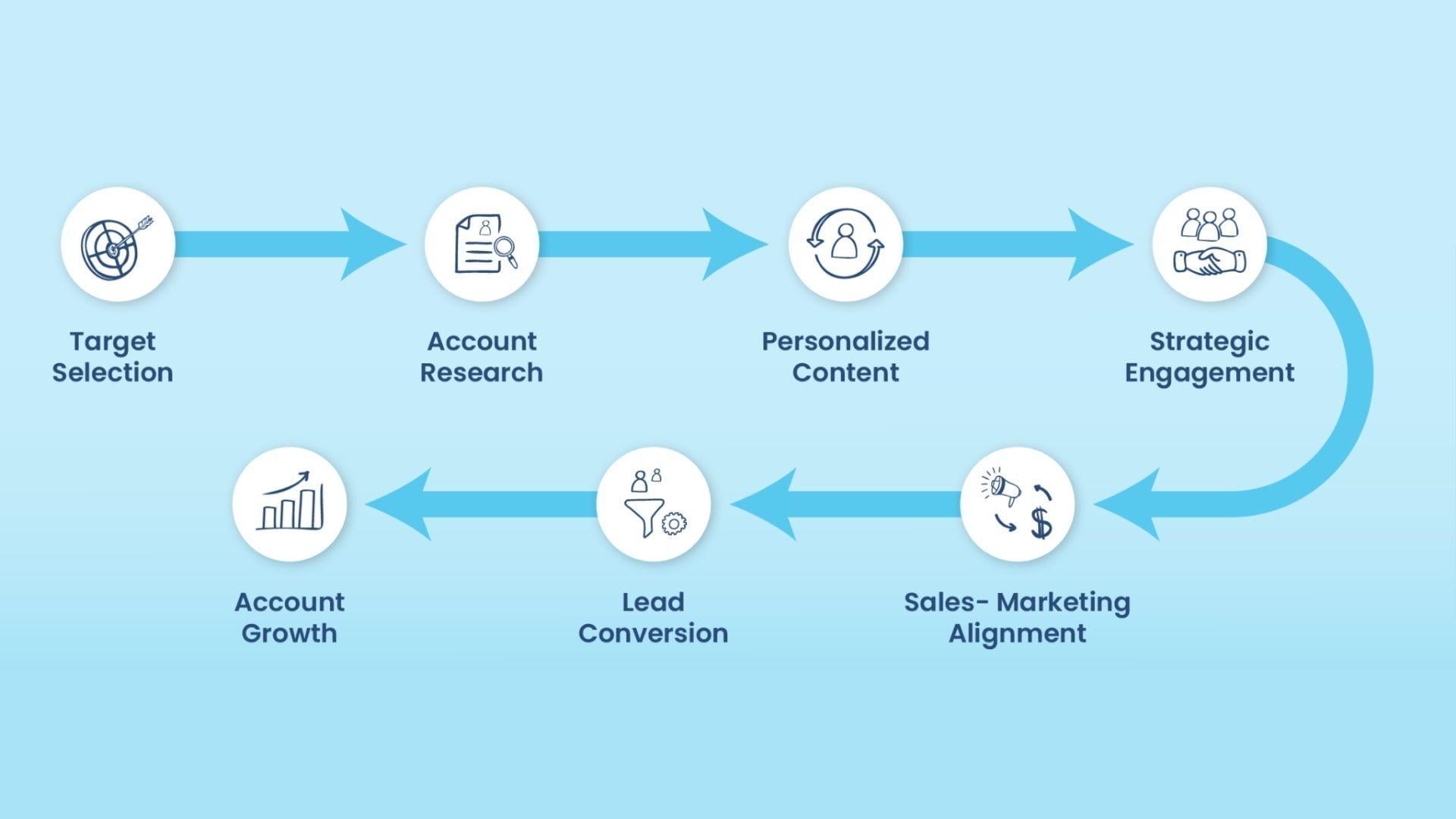
Account-based marketing is a B2B go-to-market strategy in which a company identifies a specific set of target accounts and builds coordinated marketing and sales programmes around each of them individually. Rather than generating broad awareness and waiting for inbound leads to self-qualify, ABM selects accounts first and then creates the conditions for engagement.
The core operating principle is that not all accounts are equal. A fintech company selling a loyalty platform to retail banks has a finite universe of addressable prospects. Within that universe, a relatively small number of accounts represent the majority of total addressable revenue. ABM concentrates resources where revenue potential is highest, rather than distributing them uniformly across a large, heterogeneous prospect pool.
ABM is typically structured across three tiers. One-to-one ABM applies fully customised programmes to a small number of strategic accounts, where the revenue potential justifies significant investment per account. One-to-few ABM groups accounts by shared characteristics, such as vertical, company size, or maturity stage, and tailors campaigns at the segment level. One-to-many ABM applies account-level personalisation at scale, using intent data and automation to deliver relevant messaging across a broader account list without requiring manual customisation per account.
Why ABM Works for B2B Fintech?
B2B fintech has structural characteristics that make ABM particularly well-suited as a primary growth strategy.
Deal sizes are large and contract terms are long. An enterprise loyalty platform contract or a payments infrastructure deal may have an annual contract value in the six to seven figures, with multi-year commitments standard in the sector. At that price point, the economics of broad-based demand generation, where cost per lead is relatively stable but lead quality is highly variable, deteriorate sharply. Concentrating the same budget on a defined account list produces measurably better return on marketing investment.
Buying committees are complex. According to Salesforce's State of Marketing 2025 report, B2B deals now involve an average of eleven stakeholders, each consuming five to seven content assets before engaging with a sales representative. In fintech specifically, a purchase decision for a loyalty or payments platform will typically require sign-off from the Chief Marketing Officer, the Chief Technology Officer, a compliance function, and often a procurement team. A campaign that reaches only one stakeholder, regardless of how well-targeted it is, cannot move a deal of this complexity. ABM is designed to map and engage the full buying group across multiple touchpoints simultaneously.
Regulatory and procurement barriers raise switching costs on both sides. Once a fintech solution is embedded in a client's technology stack, replacement requires significant internal effort. This creates a long initial sales cycle but also a durable relationship if the account is won. ABM's emphasis on building multi-threaded relationships before and during the sales process increases the probability of winning accounts that will remain for years rather than quarters.
ABM vs. Demand Generation: Key Differences
Demand generation and ABM are not mutually exclusive, but they operate on fundamentally different logics and should be resourced and measured separately.
Demand generation starts with a message and asks: how many people can we reach with it? It is optimised for volume, and its primary metrics are traffic, leads, and cost per acquisition. It functions well in markets with short sales cycles, low average contract values, and a large, relatively homogeneous buyer population.
ABM starts with an account list and asks: what does each account need to see from us, and when? It is optimised for account engagement depth, pipeline progression, and revenue influence. Its primary metrics are account engagement score, pipeline velocity, win rate among target accounts, and average contract value. The buyer population is deliberately constrained.
The practical implication for fintech companies is that demand generation is appropriate for building category awareness and generating inbound interest from the long tail of potential customers. ABM is appropriate for converting the specific accounts that represent material revenue opportunity. A mature fintech marketing function runs both in parallel, with clearly separated budgets, teams, and measurement frameworks.
How to Identify High-Value Accounts in Fintech?
Account selection is the most consequential decision in any ABM programme. A well-executed campaign against the wrong account list produces no commercial return.
The starting point is a clearly defined Ideal Customer Profile (ICP). In fintech, the ICP is built from firmographic attributes (industry vertical, company size, revenue band, geographic market), technographic attributes (existing technology stack, integration complexity, readiness for the proposed solution), and behavioural signals (content consumption patterns, event attendance, competitor usage, intent data from third-party platforms).
For a fintech company selling a loyalty or rewards platform, the ICP might specify mid-to-large retail banks or insurance companies with existing digital channel infrastructure, above a defined annual revenue threshold, operating in markets where loyalty programme penetration is growing. Technographic filtering would then identify which of those companies are using legacy systems that the proposed platform could replace or enhance, rather than targeting accounts that have recently invested in a competing solution.
Intent data is the layer that converts a static firmographic list into a dynamic, prioritised target set. Intent platforms track content consumption across B2B publishers, review sites, and trade media to identify companies that are actively researching specific solution categories. An account that is consuming content about loyalty platform selection, open banking integration, or customer retention in financial services is signalling purchase consideration that makes it a higher-priority target than a firmographically identical account with no visible intent signals.
The output of account selection is a tiered list: strategic accounts for one-to-one treatment, cluster accounts for one-to-few campaigns, and a broader account base for scalable personalisation. This tiering should be reviewed quarterly against pipeline outcomes and updated as accounts advance, stall, or exit the target universe.
ABM Tactics That Drive Loyalty in Financial Services
The specific tactics that work in fintech ABM reflect the sector's emphasis on credibility, compliance, and long relationship cycles.
Executive-level content and thought leadership performs strongly in financial services because the buying stakeholders at target accounts are senior, analytically rigorous, and exposed to a high volume of generic vendor outreach. Original research, regulatory briefings, and benchmarking reports that address the specific operational challenges of the target account's sector cut through in a way that product-centric content does not.
Direct and personalised outreach sequences coordinated between marketing and sales ensure that target account stakeholders receive consistent, contextually relevant communication across email, LinkedIn, and direct channels. The critical discipline is ensuring that sales outreach references and reinforces the content and messaging that the marketing programme has already delivered to the account, rather than arriving as an independent cold approach.
Executive events and roundtables serve a dual function in fintech ABM. They create a high-quality engagement opportunity for senior stakeholders who are otherwise difficult to reach through digital channels, and they provide a context in which peer-to-peer social proof, where a current customer speaks to a prospect in the same situation they were once in, can operate naturally. Closed, invitation-only formats signal exclusivity and are more effective at securing attendance from senior financial services buyers than open conferences.
Gift and loyalty mechanics at the account level are where the ABM and loyalty disciplines most directly intersect. Reward-based engagement programmes, deployed through an ABM platform and CRM-integrated loyalty infrastructure, allow fintech companies to recognise and reward meaningful engagement milestones: a completed product pilot, a completed security review, attendance at an executive briefing. These mechanics create a reciprocal dynamic in the account relationship that strengthens the perceived value of the vendor partnership before a commercial decision has been made.
Integrating ABM with Your CRM & Loyalty Stack
The technical integration between ABM activity and CRM data is the operational foundation that determines whether an ABM programme can be measured, optimised, and scaled.
At minimum, the CRM must serve as the system of record for account-level engagement data. Every marketing touchpoint with a target account, including content downloads, event attendance, email opens, and sales call activity, should be captured at the account level and accessible to both marketing and sales teams in a shared view. This shared visibility is what enables the coordinated, multi-threaded engagement that distinguishes ABM from disconnected parallel outreach.
Intent data feeds from platforms such as 6sense, Demandbase, or Bombora should be integrated with the CRM so that account prioritisation and outreach sequencing can respond dynamically to changes in intent signal strength. An account that moves from low to high intent should automatically trigger a shift in programme intensity: increased advertising spend, prioritised sales outreach, and escalation of personalised content delivery.
Where a loyalty or reward mechanic is part of the ABM programme, the loyalty platform must be connected to the CRM so that reward events, redemptions, and engagement scores are visible alongside the rest of the account's interaction history. This integration allows customer success teams to identify accounts where loyalty engagement is declining and intervene before the relationship deteriorates, which is structurally equivalent to churn prediction in a consumer loyalty context.
Measuring ABM Success in Fintech
ABM measurement requires a different framework from standard demand generation reporting. Volume metrics, such as total leads, impressions, and click-through rates, are not meaningful indicators of ABM performance. The metrics that matter are those that track account-level progression and revenue influence.
- Account engagement score aggregates all interactions between the company and a target account across channels and time periods, producing a composite measure of relationship depth. Rising engagement scores in target accounts predict pipeline progression; flat or declining scores indicate accounts that require a change in approach.
- Pipeline velocity measures the rate at which target accounts move through the sales stages. ABM target accounts should progress through the pipeline more quickly than non-ABM accounts because the pre-engagement work done before the formal sales process reduces the time required to build trust and address objections. Research indicates that well-executed ABM programmes can accelerate pipeline progression by up to 234% relative to non-ABM-touched opportunities.
- Win rate among target accounts measures the proportion of identified target accounts that ultimately convert to customers. A high win rate validates the account selection model; a low win rate suggests either that the ICP is miscalibrated or that the campaign execution is not creating sufficient engagement depth to influence the buying committee.
- Average contract value for ABM-influenced deals should exceed that for non-ABM deals. If ABM investment is disproportionately concentrated on large strategic accounts, this metric confirms that the resource allocation is targeting the right segment of the market.
- Retention and expansion revenue from existing accounts completes the measurement picture. In fintech, where long-term relationships are the commercial objective, tracking whether ABM-acquired accounts renew, expand, and deepen their product relationships over time is as important as measuring new account acquisition. The combination of new account win rate and existing account expansion revenue is the clearest overall indicator of whether the ABM and loyalty integration is producing a sustainable growth engine.