
Hyper-Personalisation in Loyalty: How AI Is Transforming Customer Rewards?
Most loyalty programmes still operate on a population-level logic. A retail member earns points, crosses a tier threshold, and receives offers that were built for a broad customer segment rather than for them individually. This model has functioned adequately for decades, but it is increasingly out of step with what customers experience everywhere else in their digital lives and, more importantly, with what the data now makes technically possible. Hyper-personalisation is the shift from segment-level to individual-level loyalty, and AI is the mechanism that makes it operationally viable at scale.
What is Hyper-Personalisation?
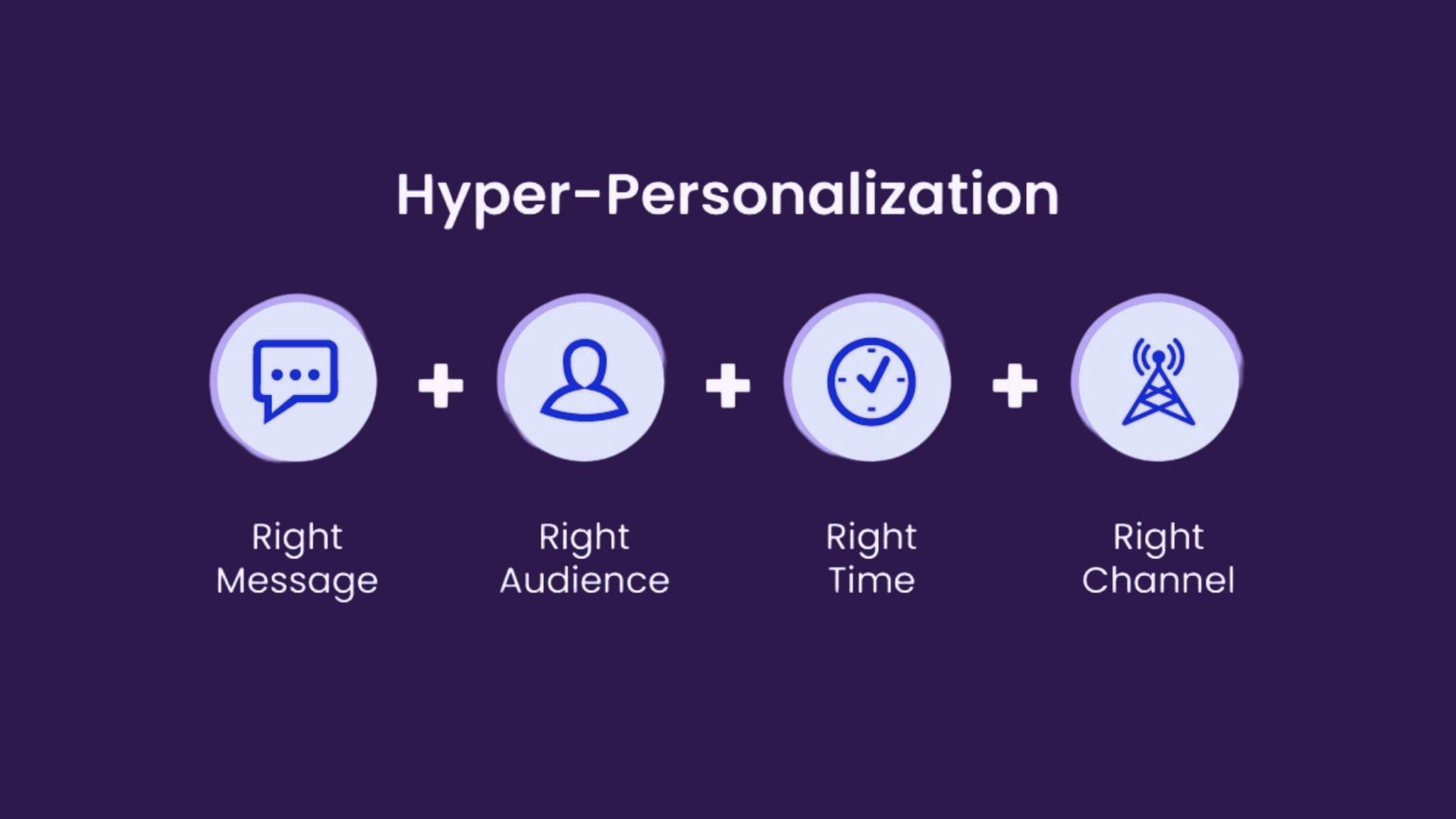
Hyper-personalisation is the practice of tailoring every element of a customer's experience, including the offer presented, the reward earned, the channel used, the timing of communication, and the content of any message, to the specific behaviour, preferences, and context of an individual at a given moment. It is not a product feature or a campaign type. It is an operational model in which each customer interaction is generated dynamically based on that individual's data rather than drawn from a pre-built template assigned to a group.
The word "hyper" is doing specific technical work here. It signals that the personalisation is not limited to inserting a customer's name into an email or showing them a product category they have browsed before. It encompasses real-time inference, predictive modelling, and continuous adaptation. A hyper-personalised loyalty offer adjusts not just to what a customer has done in the past but to what they are likely to do next, under what conditions, through which channel, and at what emotional temperature in their relationship with the brand.
Hyper-Personalisation vs. Standard Personalisation
Standard personalisation segments customers by shared characteristics and applies differentiated treatment to each segment. A loyalty programme might create five or ten tiers, assign offer catalogues to each, and deliver communications based on demographic cohorts, purchase frequency bands, or product category affiliation. This is meaningful improvement over entirely undifferentiated treatment, but it remains a population-level approximation. Every member of a segment receives the same treatment, which means the treatment is wrong for most of them to some degree.
Hyper-personalisation replaces segment membership with individual profiles. Rather than asking "what does our Gold tier customer typically respond to," it asks "what will this specific customer, at this specific moment in their life and relationship with the brand, respond to." The distinction sounds philosophical but has concrete commercial consequences. A customer who is a frequent buyer of premium skincare is not well-served by a Gold tier offer catalogue that includes discounts on categories they never shop. A customer who consistently shops on Tuesday evenings is poorly targeted by a Saturday morning push notification.
The gap between standard and hyper-personalisation is a gap between what is operationally convenient for the brand and what is commercially optimal for both parties.
How AI and Machine Learning Enable Hyper-Personalised Loyalty?
Delivering personalisation at the individual level across a member base of millions requires computational capacity and speed that no human-operated rules system can replicate. This is where AI and machine learning become operationally necessary rather than strategically aspirational.
Recommendation models use collaborative filtering and content-based filtering techniques to predict which reward a specific member is most likely to engage with, drawing on the behaviour of similar customers and the individual's own history simultaneously. These are the same model families that power content recommendations on streaming platforms, applied to the loyalty context to surface the right offer from a catalogue of hundreds at the right moment.
Propensity models estimate the probability that a specific customer will take a specific action within a defined time window, such as making a purchase, redeeming a reward, or churning. In a loyalty context, these models allow the programme to identify members who are approaching a decision point, whether that is a redemption opportunity, a tier renewal, or a risk of disengagement, and to intervene with a contextually relevant incentive before the moment passes.
Natural language processing enables dynamic content generation, allowing member communications to be written at the individual level based on their current status, recent activity, and declared preferences rather than from a fixed copy library. This extends hyper-personalisation from the offer layer into the communication layer, producing messages that feel written for the recipient rather than assembled from templates.
Real-time processing infrastructure, typically implemented through streaming data pipelines and event-driven architectures, ensures that the AI model's outputs are applied within the interaction rather than in a delayed batch. A member who adds a product to their basket should see a relevant reward prompt within that session, not in tomorrow's email.
Data Sources That Power Hyper-Personalisation
The quality of hyper-personalisation is bounded by the quality and completeness of the data feeding the models. Four data categories contribute meaningfully to individual-level loyalty personalisation.
Transactional data is the foundational layer: purchase history, basket composition, category affinity, spend frequency, and average order value over rolling time windows. This is the most reliable data type because it reflects actual revealed behaviour rather than stated preference.
Behavioural data from digital channels captures how a member interacts with the brand outside of purchase events: app session frequency and duration, content engagement patterns, offer views versus offer redemptions, and the sequence of actions that precede and follow a transaction. This data reveals intent signals that transactional data alone cannot surface.
Zero-party data, information that the customer has actively declared through preference centres, quiz responses, or account settings, provides the explicit signal layer that removes the need for inference in areas where the customer has already communicated directly. A member who has declared a preference for sustainable products should receive personalisation driven by that declaration without requiring the model to infer it from behaviour.
Contextual data adds temporal and situational dimensions: the time of day, the device being used, the customer's location, the proximity of a seasonal event, and the current inventory status of relevant products. A contextually aware personalisation model produces different outputs for the same customer at 8am on a Monday than at 7pm on a Friday, because the relevant response is different.
Real-World Hyper-Personalisation in Loyalty Programmes
UK retail provides several current examples of hyper-personalisation being implemented at scale in loyalty programmes.
Marks & Spencer relaunched its Sparks programme in 2025 with what it described as "a suite of transformed AI and data capabilities" including machine learning and generative AI models to deliver personalised offers and rewards. The updated programme centres on a digital wallet that generates monetary rewards based on individual shopping behaviours, such as cross-department purchasing patterns and category spend trends, rather than fixed tier benefits. The stated intent is that the programme becomes more valuable the more a customer uses it, creating a compounding personalisation loop.
Tesco Clubcard uses its member transaction database, one of the largest retail data assets in the UK, to generate millions of distinct personalised offer combinations delivered through the app and email channel. The programme's AI layer determines not just which offers to show but which combination and ordering produces the highest overall engagement for each individual member.
Boots Advantage Card applies category-level preference data captured through the app's declared interests feature to filter the promotional catalogue each member sees, reducing irrelevant communications and improving offer redemption rates by concentrating spend on contextually appropriate incentives.
Starbucks, operating across multiple markets, has been cited extensively as a benchmark for AI-driven loyalty personalisation, with its machine learning infrastructure generating individual offer variants across its active member base, reportedly driving a 15% improvement in customer retention compared to its pre-AI programme architecture.
Challenges and Ethical Considerations
The same data richness that enables hyper-personalisation also creates risks that loyalty programme operators must manage explicitly and continuously.
Privacy and consent are the most immediate concerns. UK GDPR requires that personal data used for automated decision-making be processed on a lawful basis, that data subjects be informed of the purposes for which their data is used, and that the logic of automated decisions be explainable on request. A hyper-personalisation model that draws on dozens of behavioural signals to generate an individual offer must be built with data governance architecture that can satisfy these requirements, not retrofitted to comply after the fact.
Algorithmic bias is a structural risk in any model trained on historical data. If the training dataset reflects historical inequalities in who was targeted with which offers, the model will perpetuate those patterns at scale. Regular bias audits, in which model outputs are examined for systematic differences in treatment across demographic groups, are a necessary operational practice rather than an optional governance exercise.
The "creepiness threshold" is a real commercial risk. Research consistently shows that personalisation which feels too precise, where customers perceive that the brand knows things they did not consciously share, generates discomfort and erodes trust. The mitigating discipline is transparency: communicating clearly that personalisation is driven by the customer's own declared preferences and purchase activity, and giving them meaningful control over how their data is used, converts potential surveillance anxiety into a perceived value exchange.
Filter bubbles represent a less discussed but commercially significant risk. A personalisation model that exclusively reinforces past behaviour prevents customers from discovering new product categories, which limits the programme's ability to deepen the relationship and raises long-term category concentration risk for the retailer.
How to Get Started with Hyper-Personalisation
The path to hyper-personalisation is sequential, and attempting to implement the full model before the foundational capabilities are in place typically produces disappointing results.
The first step is data unification. Transactional, behavioural, and declared preference data must be consolidated into a single customer profile that is accessible in real time by the personalisation layer. A loyalty programme operating on siloed databases cannot produce individual-level personalisation regardless of the sophistication of the models applied.
The second step is model selection calibrated to current data volume. Ensemble methods such as gradient boosting and random forests perform reliably on structured loyalty data at scale and are interpretable enough to satisfy compliance requirements. Neural network architectures offer higher ceiling performance at very large data volumes but require more infrastructure and are harder to audit. Starting with interpretable models and migrating to more complex architectures as data volume grows is more commercially efficient than the reverse.
The third step is defining the personalisation scope before implementing the technology. Personalising every element of the programme simultaneously is operationally complex and difficult to attribute. Prioritising the highest-leverage personalisation layer, typically the offer served at the point of highest intent, and building outward from there produces measurable results faster and generates the data needed to extend personalisation into lower-frequency touchpoints over time.
The fourth step is building measurement infrastructure that can distinguish the incremental effect of personalisation from underlying behaviour. Holdout testing, in which a randomised subset of members receives non-personalised treatment while the remainder receives the AI-driven experience, is the only reliable method for establishing the commercial case for continued investment.