Product-Led Growth & Loyalty: How PLG Companies Build Engaged, Loyal Users
The most successful software companies of the past decade share a structural characteristic that traditional enterprise sales models do not: they allow users to experience the product's core value before a commercial conversation ever takes place. This is the foundational premise of product-led growth, and it produces a customer relationship that is qualitatively different from one initiated through a sales call or a marketing campaign. Understanding how PLG and loyalty reinforce each other is increasingly important for any SaaS or B2B brand building for sustainable, capital-efficient growth.
What is Product-Led Growth (PLG)?
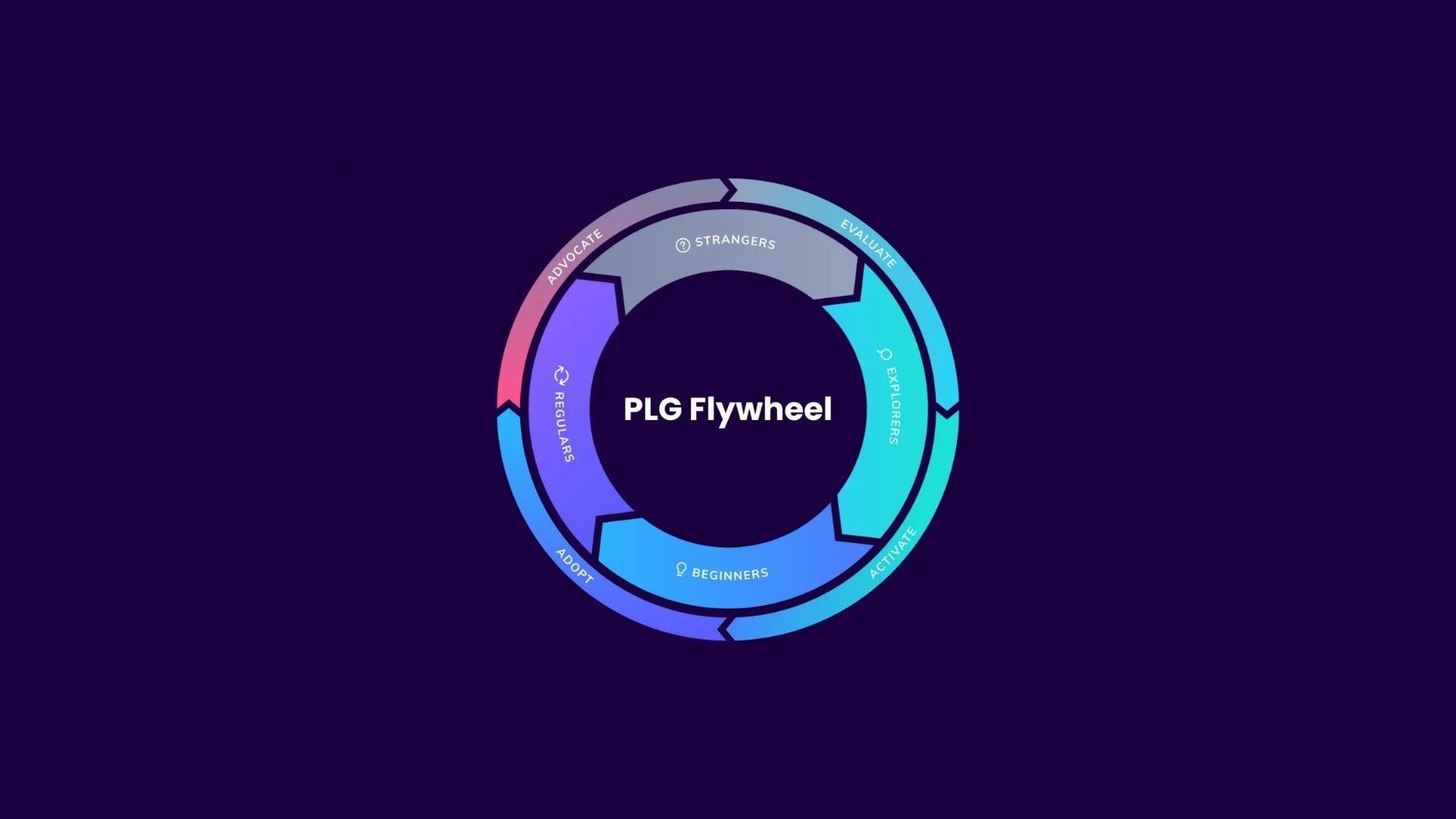
Product-led growth is a go-to-market methodology in which the product itself is the primary driver of user acquisition, activation, conversion, and expansion. Rather than relying on a sales team to explain the product's value proposition or a marketing team to generate sufficient awareness to produce an inbound pipeline, PLG companies design the product experience so that users can discover, adopt, and share it with minimal external assistance.
The defining operational consequence of PLG is that the product must deliver its core value quickly and frictionlessly enough that users will self-serve through the entire journey from sign-up to activation. Time to Value, the duration between a user's first interaction and the moment they experience the product's primary benefit, is the most operationally critical metric in a PLG model. A short Time to Value creates the conditions for retention; a long one creates the conditions for early abandonment.
PLG vs. Sales-Led vs. Marketing-Led Growth
Sales-led growth (SLG) puts a human sales process at the centre of customer acquisition. A prospect is identified, qualified, and moved through a buying process by a sales representative. The relationship begins before significant product usage, and the product is often evaluated through a demonstration rather than direct experience. This model works well for high-ACV enterprise products with complex procurement requirements, but it is expensive and does not scale efficiently at lower price points.
Marketing-led growth puts content, brand, and demand generation at the centre. The marketing team creates awareness, captures intent, and passes qualified leads to sales or to a self-serve checkout flow. The product's role is to convert interest that marketing has already generated, rather than to generate the interest itself.
PLG inverts this sequence. The product generates the interest, drives adoption, and creates the commercial signal that may subsequently trigger a sales conversation. The key distinction is the introduction of the Product Qualified Lead (PQL), a user who has demonstrated buying intent through product behaviour rather than through a form submission or a sales call. PQLs convert at 3 to 5 times the rate of marketing qualified leads because they have already experienced the product's value before the commercial conversation begins.
In practice, most mature PLG companies operate a hybrid model. PLG handles broad-based acquisition and early activation; sales teams engage PQLs and handle enterprise deals that require negotiated contracts and procurement processes. Slack, Figma, and Notion all follow this architecture.
How PLG Creates Natural Loyalty?
In a PLG model, loyalty is not a programme feature layered on top of the product. It is an emergent property of the product itself. When a user's productivity, workflow, or professional identity becomes embedded in a product, the switching cost is not primarily financial. It is habitual, social, and structural.
The mechanism operates through what PLG practitioners call investment depth: the accumulation of user-generated content, integrations, customisations, team connections, and institutional knowledge within the product. A Notion user who has built a knowledge base across dozens of pages, integrated their project management into a template system they designed, and onboarded their team has made an investment that takes time to replicate elsewhere. Each new workflow created, each new team member invited, and each new integration connected deepens the relationship between the user and the product.
This is loyalty in a genuinely functional sense. It is not loyalty manufactured by reward mechanics but loyalty produced by delivered value and accumulated investment. The role of formal loyalty mechanics in a PLG business is to accelerate and reinforce this process, not to substitute for it.
Loyalty Mechanics in a PLG Model
Freemium to Premium Journeys
The freemium tier is where PLG loyalty begins. A free user who reaches the product's core value during the free experience has demonstrated at least the minimum threshold of engagement required for the product to be useful to them. The conversion from free to paid is not a sales event in the traditional sense: it is the user deciding that the value they have already experienced is worth paying for on a sustained basis.
Strategic freemium design structures the free tier so that it delivers genuine value while creating natural expansion triggers. These triggers are not artificial barriers but genuine limitations that a user who is getting real value from the product will encounter in the normal course of use. Slack's 2,000-message limit, Dropbox's storage ceiling, and Figma's team collaboration restrictions are all designed so that a user who has reached the limit is, by definition, a user who has already demonstrated product value attainment. The conversion prompt arrives at exactly the right moment in the loyalty journey.
In-Product Reward Triggers
In-product reward mechanics acknowledge and reinforce user behaviour without requiring the user to leave the product experience. Onboarding completion milestones, feature adoption congratulations, streak mechanics for consistent engagement, and progress indicators toward higher usage tiers all function as micro-loyalty events that sustain motivation during the early stages of product adoption.
The commercial logic is direct: users who complete structured onboarding activate at higher rates, and activated users retain at higher rates. An onboarding completion rate study cited in PLG benchmarking research shows that companies with structured onboarding see first-year retention 25% higher than those without it. Reward triggers embedded within onboarding convert what could be a passive feature-discovery process into an active milestone-achievement experience.
At the expansion stage, in-product reward triggers communicate the next level of value available through premium features. A user who has exhausted the free tier's primary capabilities and receives a contextual prompt showing what they could accomplish with the next feature set is experiencing a loyalty trigger that is inherently relevant because it is anchored to demonstrated product usage.
Community and Advocacy
Community is the loyalty mechanic that most distinguishes PLG companies from traditional software vendors. When a product's users form a community, they create social value that the product itself cannot generate: shared knowledge, mutual support, peer-to-peer learning, and professional identity formation.
Figma's community of published templates, Canva's creator ecosystem, Notion's template marketplace, and Slack's Community Chapters programme all represent intentional investments in community as a loyalty architecture. A user who has published a template, contributed to a discussion thread, or met peers through a community event has built a social relationship with the product that transcends the purely functional. The switching cost now includes a social dimension that has nothing to do with features or pricing.
Advocacy, the point at which loyal users actively recommend the product within their professional network, is the measurement proof point for community-driven loyalty. In PLG, the referral or invite metric, the rate at which users bring others into the product, is both a loyalty indicator and a growth lever. Measuring invites per user as a distinct metric from standard acquisition channels reveals which user segments are generating organic growth and which product experiences are most likely to produce it.
Measuring Loyalty in a PLG Business
PLG loyalty measurement requires a different metric architecture from traditional loyalty programme KPIs. The metrics that matter are behavioural rather than transactional.
The stickiness ratio, calculated as Daily Active Users divided by Monthly Active Users (DAU/MAU), measures the frequency with which users return to the product. A stickiness rate above 25% is considered strong for B2B SaaS; it indicates that a significant proportion of the monthly active base is engaging on a daily basis, which is the usage pattern most predictive of long-term retention.
Time to Value measures how quickly new users reach the activation event most predictive of retention in the specific product. This event is empirically defined: it is the in-product action that is most common among retained, converting users in their first session or first week. For collaboration tools, it is typically inviting a team member. For analytics tools, it is creating a first custom report. For design tools, it is completing a first project.
Feature adoption breadth measures what proportion of a user's potential workflows within the product are actually being used. Shallow adoption, where a user only uses one or two features consistently, predicts churn more reliably than headline engagement volume. A user who logs in frequently but only uses a single feature is a more fragile retention bet than one who uses fewer sessions but has activated multiple core capabilities.
NRR in a PLG business reflects the cumulative effect of all loyalty dynamics: activation depth, usage frequency, expansion behaviour, and community investment. PLG-native companies like Snowflake and Twilio have historically reported NRR in the 120% to 140% range, reflecting the compounding nature of usage-based expansion in products where deeper use translates directly to higher revenue.
Examples of PLG and Loyalty Done Right
Figma built its loyalty architecture through a combination of product excellence, community infrastructure, and viral collaboration mechanics. Every shared design file is both a product use event and an acquisition channel. Every template published in the Figma Community is an act of advocacy that creates product investment for both the publisher and every user who adopts the template. The company crossed $1 billion in annual revenue run rate primarily through this PLG-driven model before its acquisition by Adobe.
Canva has reached 260 million monthly active users with $3.5 billion in ARR growing at over 40% per year as of 2025 by combining a low-friction freemium entry point with brand kit and team collaboration features that create institutional investment, and a creator ecosystem that generates community-driven loyalty at scale.
Dropbox's early referral programme remains the canonical example of a PLG loyalty mechanic: additional storage awarded to both referrer and referred user, with the reward directly tied to the product's primary value metric. Every referral simultaneously acquired a new user, retained an existing one, and deepened both users' investment in the product.
Slack used its 2,000-message free tier to create PQL signals at scale. Teams that reached the message limit had already demonstrated that Slack was central to their communication workflow. The conversion prompt arrived at the moment of maximum demonstrated value, producing conversion rates that no outbound sales process could match. The company achieved a $23 billion valuation at IPO having built most of its early growth through this PLG loyalty loop.