

Mobile Loyalty App Features: The 10 Capabilities That Separate High-Performing Apps from Average Ones
Why the Mobile App Is Now the Primary Loyalty Touchpoint
The plastic loyalty card has had a long run, but its time as the primary touchpoint for loyalty programme interaction is definitively over. In most active loyalty programmes, the mobile app now accounts for the majority of member interactions: checking balances, browsing offers, redeeming rewards, and receiving communications. The programmes with the highest active member ratios are almost universally those with the strongest app experiences.
This matters strategically because the app is not just a delivery mechanism for loyalty benefits. It's the primary source of first-party behavioural data, the channel through which personalisation is delivered, the interface through which gamification operates, and the touchpoint that keeps the programme visible in the member's daily life between purchase occasions. A loyalty programme without a well-designed app is operating at a structural disadvantage that no amount of generous earn rates can overcome.
The features that distinguish a high-performing loyalty app from an average one are not simply a matter of aesthetics or technical sophistication. They reflect deliberate choices about what the programme prioritises at the product level and how seriously the brand treats the mobile experience as a competitive asset. Here are the ten capabilities that consistently separate leaders from the field.
Feature 1: Real-Time Points Balance and Activity Feed
The points balance is the first thing most members open a loyalty app to check, and the way that balance is presented sets the tone for the entire programme experience. A balance displayed as a raw number with no context is the minimum viable implementation. A high-performing app shows the balance in a way that is immediately interpretable: the monetary equivalent, the distance to the next reward threshold, the points due to expire within a defined window, and a recent activity feed that shows earning and redemption events in chronological order.
The activity feed serves a function beyond transparency. It reinforces the earn-behaviour connection by showing the member, immediately after each qualifying transaction, exactly what they received. That confirmation matters psychologically: it closes the feedback loop between action and reward that is essential to behaviour conditioning. An app that updates the balance in real time after a purchase delivers a meaningfully better experience than one that shows a 24-hour or 48-hour delay, because the immediacy is part of what makes the reward feel real rather than theoretical.
The technical requirement is a real-time API connection between the loyalty platform's transaction processing layer and the app's balance display. This is non-trivial for programmes where points allocation goes through a batch process, and it's one of the clearer indicators of the maturity of a programme's underlying platform architecture.
Feature 2: Personalised Offer Hub
An offer hub that shows the same content to every member is not a personalised offer hub; it's a broadcast channel with a loyalty wrapper. The distinction matters because members are now accustomed to personalised content experiences from their streaming platforms, their social feeds, and their e-commerce recommendations. A loyalty app that surfaces generic offers alongside a message claiming they're 'just for you' creates dissonance that erodes trust in the programme's personalisation credentials.
A genuinely personalised offer hub uses purchase history, browsing behaviour, category preferences, and lifecycle stage to serve different offers to different members at the same time. A member who has never purchased from the home category sees offers relevant to their demonstrated purchasing pattern; a member who consistently buys health and beauty products sees category-relevant bonus earn opportunities and partner offers that match their interests. The technological requirement is an offer decisioning layer that can apply segmentation or individual-level rules to the offer serving logic in real time.
The offer hub should also be time-aware: offers should appear when they're approaching expiry, not just when they're first issued. A push notification that surfaces a relevant offer 48 hours before it expires is more effective than one sent at issuance, because the urgency created by imminent expiry activates the loss aversion response that the issuance notification doesn't.
Feature 3: In-App Challenges and Gamification
Gamification in a loyalty app moves the programme from a passive earn-and-redeem system to an active engagement environment. A well-designed challenge gives members a defined objective, a visible progress indicator, a time window, and a meaningful reward for completion. The combination activates multiple psychological mechanisms simultaneously: goal gradient, temporal scarcity, and the intrinsic satisfaction of task completion.
The design principle for challenges is that they should require incremental behaviour, not just reward existing behaviour. A challenge that offers bonus points for three visits in 14 days is designed to lift visit frequency; a challenge that simply awards bonus points to everyone who visits once in a month is rewarding behaviour that would have happened anyway without the challenge incentive. The distinction between behaviour change and behaviour reward is the difference between a programme that moves metrics and one that merely subsidises them.
Progress visualisation is the critical UX element. The member needs to be able to see, at a glance, where they are in each active challenge, how many more actions are required, and how much time remains. Progress bars, step counters, and milestone markers all serve this function. The interface should also surface challenges at relevant moments, such as showing a visit-frequency challenge when the member opens the app near a store location, rather than only in a dedicated challenges section that requires active navigation.
Feature 4: Wallet Integration (Apple Pay and Google Pay)
Native wallet integration, where the loyalty card lives alongside payment cards in Apple Wallet or Google Wallet, removes one of the most persistent friction points in the loyalty experience: having to open a separate app to present a membership card at the point of sale. When the loyalty card is in the wallet, it can appear automatically on the lock screen when the member is near a participating store, and it can be presented at NFC terminals with the same gesture the member uses to pay.
From a programme engagement perspective, wallet integration increases the frequency with which members identify themselves at the point of sale, because the friction of doing so has been reduced to near zero. Higher identification rates mean more complete transaction data, better personalisation capability, and fewer instances of the frustrating 'I forgot to scan' conversation that results in missing points and customer service contacts.
The technical integration varies between Apple and Google implementations, and the capabilities available differ between loyalty card passess and full wallet API integrations. Brands investing in this feature should build for both platforms and test the lock-screen proximity trigger specifically, since this is the feature that converts a passive wallet credential into an active engagement mechanism.
Feature 5: Push Notification Strategy
Push notifications are the most direct communication channel available to a loyalty app, and the most easily destroyed through misuse. An app that sends too many notifications, or notifications that aren't relevant to the member receiving them, generates opt-outs that are almost never recovered. Once a member disables push notifications for a loyalty app, the programme has lost its most direct route to their attention and has no clean mechanism to re-establish it.
A high-performing push notification strategy is defined by three properties: relevance, timing, and restraint. Relevance means that the notification contains information or an offer that is specifically connected to the receiving member's demonstrated preferences, not a broadcast of the same message to all members. Timing means that notifications are sent at moments when they are likely to influence behaviour, near a store location, immediately before an offer expires, or at the point where a member has just crossed a meaningful points threshold. Restraint means that the total volume of notifications is managed so that each one arrives with a reasonable expectation that the member will find it valuable rather than intrusive.
The governance model for push notifications should be as carefully designed as the creative itself. A permission to send member their loyalty programme notifications does not translate to permission to send them marketing messages for unrelated products. The distinction matters both for ICO compliance under UK GDPR and for the member's practical experience of the programme. Programmes that blur this line consistently see higher opt-out rates and lower engagement scores than those that keep notification content programme-specific.
Feature 6: QR Code and NFC In-Store Integration
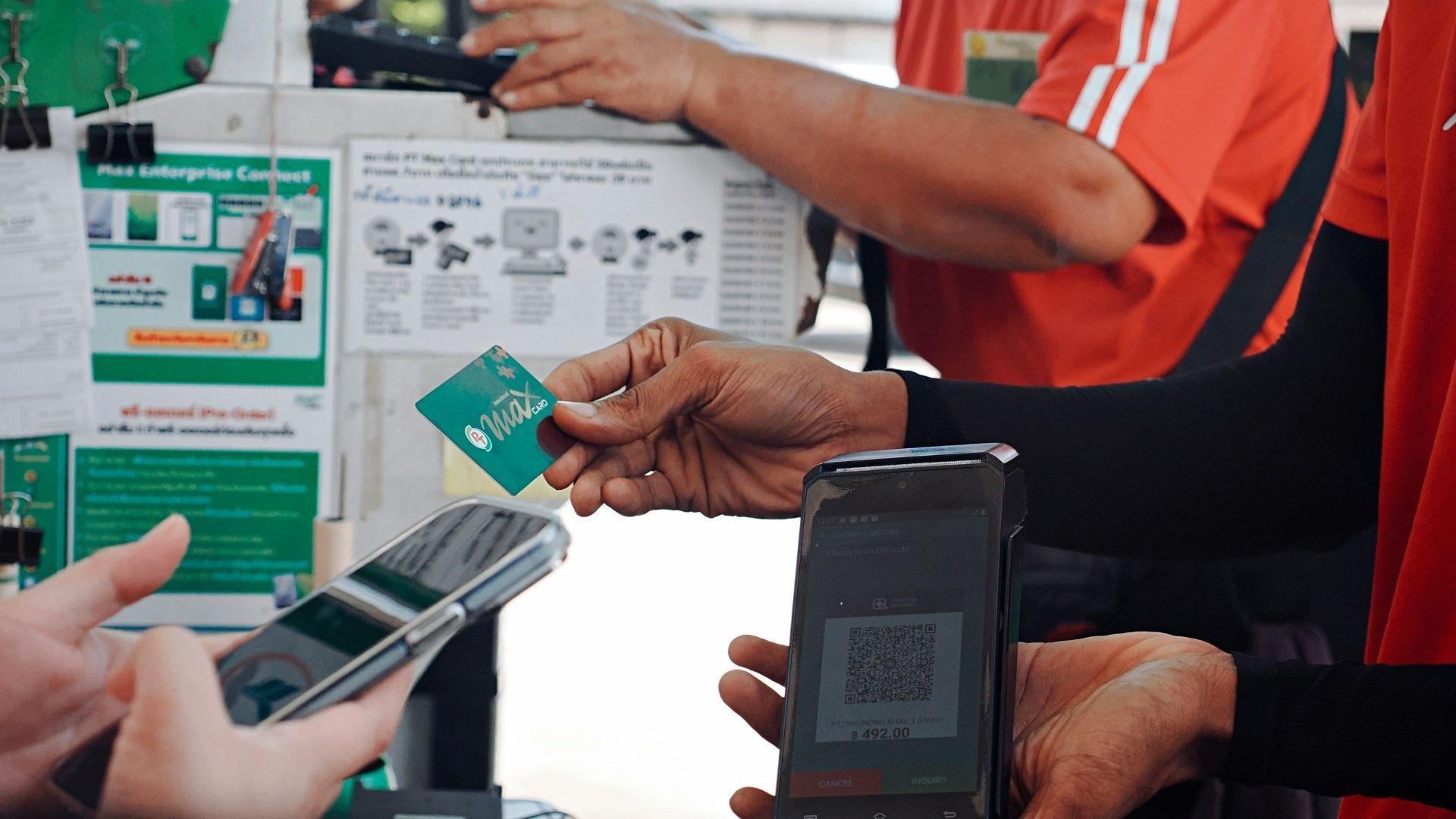
The in-store identification mechanism is one of the most underappreciated elements of loyalty app design. In a physical retail environment, the member needs to be able to identify themselves in the checkout interaction with minimal friction, under time pressure, and often while also managing payment, a bag, and a conversation with a member of staff. Any additional steps in this flow, navigating to a specific screen, waiting for a barcode to load, or entering a membership number, represent friction that reduces the frequency of successful identification.
QR code integration should place the scannable code on the app's home screen or as the first tap from a floating action button, not buried in a 'show membership card' menu item. NFC integration, where available, allows the identification to happen with a single tap against a reader, reducing the interaction to a single gesture. For programmes where identification and payment happen simultaneously, the integration between the loyalty layer and the payment terminal should be designed to present both in a single interaction rather than requiring the member to scan twice.
The home screen placement of the QR code also serves a visibility function: every time the member opens the app, the code is the first thing they see, which reinforces the habit of opening the app before or during a store visit rather than after.
Feature 7: Referral and Social Sharing
Referral mechanics built directly into the loyalty app perform significantly better than those delivered through a separate email or web interface, because the app is where the member is most engaged with the programme and most likely to act on an invitation to share it. A well-designed in-app referral feature surfaces the referral code or link at high-sentiment moments, immediately after a reward has been redeemed, when the member achieves a tier upgrade, or when a birthday benefit is unlocked, rather than as a permanent navigation item that the member has to seek out.
Social sharing integration allows members to share milestone achievements directly to their preferred social platform without leaving the app. A member who has just achieved Gold status, completed a streak challenge, or redeemed a meaningful reward has a natural sharing impulse at that moment. Making sharing frictionless by pre-formatting the content, personalising the message to the specific achievement, and providing a referral link within the shared content converts that impulse into a measurable advocacy action.
Feature 8: Reward Catalogue and Instant Redemption
The reward catalogue is the most commercially sensitive element of the loyalty app because it is where the programme's value proposition is most concretely tested. A catalogue that requires too many points for too little reward, that presents rewards in categories irrelevant to the member's interests, or that takes multiple taps to reach a redemption confirmation, fails at the most important moment in the member journey.
High-performing catalogues are curated, not comprehensive. They surface the rewards most relevant to the individual member's profile and behaviour first, and they make the path from catalogue to confirmed redemption as short as possible. Instant redemption, where a reward is delivered to the member's app or account immediately upon confirmation rather than after a processing delay, sets the expectation standard that members increasingly apply to the category. A redemption confirmation that says 'your reward will be processed within 3 to 5 business days' is not competitive with one that delivers the reward in the same session.
Feature 9: Tier Progress Visualisation
Tier progress is one of the most motivating elements of a loyalty programme, but only if the member can see it clearly and understand what they need to do to advance. A text description of tier thresholds, buried in a terms and conditions section, delivers none of the motivational value that a well-designed progress visualisation does.
The most effective tier progress interfaces show the member their current position within their tier, the distance to the next tier in both absolute terms and as a visual percentage, and the specific benefits that unlocking the next tier would provide. The goal gradient effect, where motivation increases as a goal approaches, only operates if the goal is visible. A member who can see that they are 12% from the next tier with specific benefits named and illustrated is considerably more motivated to make an incremental purchase than one who has to calculate their own tier distance from a raw points balance.
Feature 10: Member Profile and Preference Centre
The preference centre is the feature that most loyalty apps implement as a compliance checkbox and most members never see. A high-performing loyalty app treats the preference centre as a strategic asset: the place where the member can tell the programme what they care about, which produces better personalisation and, as a result, higher engagement with everything the programme subsequently delivers.
A well-designed preference centre covers communication channel preferences (email, push, SMS), content category preferences (which product areas the member wants to hear about), frequency preferences (how often the member wants to receive offers), and programme feature preferences (whether the member uses in-store scanning, wants to see the tier progress widget, or participates in challenges). Members who have actively set their preferences show consistently higher engagement rates than those who receive default communications, because the programme's output reflects their stated interests rather than an assumed average.
The UX principle is that the preference centre should be easy to find, easy to update, and clearly connected to a benefit for the member. 'Tell us what you care about and we'll only show you the offers that matter to you' is a more compelling invitation to engage than 'manage your communication preferences.'
Benchmarks and KPIs for Loyalty App Performance
Measuring the performance of a loyalty app requires metrics that go beyond download numbers and programme enrolment. The metrics that reflect the quality of the app experience specifically, rather than the programme's overall commercial performance, are:
- Monthly active users as a proportion of total enrolled members: this ratio, ideally above 35% for retail programmes and above 50% for QSR and daily-use categories, measures how many enrolled members are engaging with the app regularly rather than simply having it installed.
- Average sessions per active user per month: a higher frequency of app opening indicates a programme that members find reasons to engage with between purchase occasions, not just when transacting.
- Push notification opt-in rate: below 40% indicates that the notification strategy is perceived as intrusive or irrelevant; above 65% is a strong signal of member trust in the programme's communications.
- In-app challenge participation rate among active members: programmes with strong gamification features typically see 20 to 40% of active members engaging with at least one challenge per quarter.
- App store rating: a rating below 4.0 across a significant review volume is a reliable indicator of UX or technical reliability issues that require attention. High-performing loyalty apps consistently maintain ratings above 4.3.
- Redemption completion rate: of members who navigate to the reward catalogue, what percentage complete a redemption? A high drop-off rate between catalogue view and redemption confirmation indicates UX friction that is suppressing the programme's most important conversion event.
These metrics should be reviewed monthly, not quarterly, and changes in any one metric should trigger an investigation into whether a recent platform update, a push notification campaign, or a change to the offer catalogue is the likely cause. Loyalty app performance is sensitive to product changes in a way that aggregated programme metrics often aren't, and the app-specific data tells a more granular and actionable story than the programme-level KPIs alone.