

Pay With Points: How 'Points as Currency' Is Reshaping Loyalty Redemption
For most of loyalty's history, redemption has been a deferred event. A member spends, earns, accumulates, and eventually reaches a threshold at which they can claim something. The gap between earning and redeeming is measured in weeks, months, or in the case of programmes with high thresholds and modest earn rates, years. That gap has always been the programme's Achilles heel: it creates a long delay between the behaviour the brand wants to reward and the moment the customer feels rewarded, which weakens the psychological connection between the two.
Pay with points changes the structure of that relationship. When accumulated points can be applied directly at the point of payment, in partial or full settlement of a transaction, the redemption event happens in the moment the member chooses it, not on a schedule the programme sets. That immediacy has significant consequences for member engagement, programme economics, and the technical architecture required to deliver the experience reliably. Each of those consequences is worth understanding before a brand commits to the model.
What Is the Pay With Points Model?
Pay with points, sometimes referred to as points-as-currency or burn-at-checkout, is a redemption mechanic that allows loyalty programme members to apply their accumulated points balance directly against the cost of a transaction at checkout. Rather than redeeming points for a specific predefined reward from a catalogue, the member chooses how many points to apply, and the checkout system subtracts the equivalent monetary value from the total amount due.
The model exists on a spectrum. At the simpler end, a member might redeem a defined unit of points (say, 100 points worth £1) against any transaction above a minimum threshold, with the remainder settled by standard payment. At the more sophisticated end, a member can choose any partial combination of points and payment, with the checkout interface showing the real-time balance and the residual amount in a single view. Some programmes extend the model further by allowing points to be applied across channels, online, in-store, and through a mobile app, with a single unified balance.
What separates pay with points from a traditional voucher redemption is the absence of a fixed redemption denomination. A voucher model requires the member to redeem a specific number of points for a specific voucher value, which then functions as a separate payment instrument. The pay with points model makes the points themselves the payment instrument, removing the intermediate step and the associated friction.
Why Points-as-Currency Drives Higher Engagement Than Vouchers
The voucher model, which has dominated loyalty redemption for decades, has a fundamental engagement problem: it creates a false redemption event. The member redeems their points for a voucher, receives a confirmation, and then faces a second barrier before the value is realised: they have to remember to use the voucher, in the right channel, before it expires, and for a purchase that is large enough to justify its use.
Each of those conditions is a friction point that reduces the actual realisation rate. Research across loyalty programmes consistently shows that voucher expiry rates are significantly higher than programme operators typically acknowledge, and that the gap between vouchers issued and vouchers redeemed represents a real and measurable drag on perceived programme value. Members who have vouchers that expire unused don't typically feel that the brand has saved money; they feel that the programme has failed them.
Pay with points removes the intermediate step and all of the associated friction. The member's balance is available at every checkout, the application is immediate, and the value is realised in the transaction that prompted it. Programmes that have moved from voucher redemption to pay with points consistently report higher active redemption rates, higher redemption frequency among members who were previously accumulating without redeeming, and an increase in the proportion of members who describe the programme as genuinely useful rather than theoretically valuable.
The engagement benefit also extends to programme visibility. When a member can see their points balance displayed at checkout alongside the option to apply it, the programme is present in every purchasing moment rather than only when the member remembers to check their balance. That presence drives both redemption and the earn behaviours that build the balance, because the programme is no longer something the member thinks about occasionally; it's part of every transaction.
The Psychology of Instant Redemption vs. Saving Up
The choice between instant redemption and saving toward a larger reward is not simply a rational calculation of value; it's a decision shaped by several distinct psychological forces, and programme designers need to understand both sides of the tension to design a redemption experience that serves the majority of members well.
The case for instant redemption rests on temporal discounting: the psychological tendency to value a reward available now more highly than an equivalent reward available in the future. A pound of value applied to today's transaction feels more real and more immediate than the same pound of value promised as part of a future redemption event. For members with relatively small balances, or for those who have had previous experience of earning rewards they never actually used, instant redemption provides a tangible proof of programme value that builds trust.
The case for saving up rests on the goal gradient effect: the motivating pull of approaching a defined, meaningful objective. A member who is 200 points away from a reward they actively want will sometimes choose to withhold redemption not because they're being irrational but because the anticipation of achieving the goal is itself motivating. Programmes where the most desirable rewards require meaningful accumulation can use this psychology to drive sustained engagement across a longer earn cycle.
The practical resolution is to design the pay with points model in a way that accommodates both patterns. A minimum redemption threshold, set at a level that is achievable for most members within a reasonable timeframe, prevents trivially small point applications that create operational overhead without meaningful member value. A transparent display of what larger redemptions would unlock, shown alongside the instant redemption option at checkout, makes the saving incentive visible at the moment the member is making the choice. Designing for both tendencies simultaneously produces higher overall programme satisfaction than designing exclusively for either one.
Technical Architecture: Real-Time Points Ledger and Checkout Integration
The technical requirements for pay with points are considerably more demanding than for a voucher-based redemption model, and underestimating those requirements is one of the most common causes of delayed or failed implementations.
The core requirement is a real-time points ledger: a system that maintains an accurate, current record of each member's points balance and can confirm a balance, deduct a redemption, and write the updated balance back within the latency constraints of a live checkout transaction. In a physical retail environment, that latency constraint is typically two to three seconds; a longer delay noticeably degrades the checkout experience. In a digital checkout environment, slightly more latency is acceptable but the requirement for transactional consistency remains.
The ledger must handle several specific technical challenges:
- Race conditions: if a member has multiple checkout sessions open simultaneously, or if a network retry creates a duplicate deduction request, the ledger must prevent double-debiting without failing the transaction.
- Rollback on failed transactions: if the payment portion of a split transaction fails after the points deduction has been processed, the ledger must be able to return the deducted points to the member's balance.
- Refund handling: when a transaction is refunded, the points that were applied to that transaction need to be reinstated to the member's balance. The rules governing partial refunds, where only a portion of the transaction is reversed, need to be defined explicitly before implementation.
- Offline resilience: for in-store environments where connectivity may be intermittent, the system needs a defined behaviour for points applications that cannot be immediately confirmed against the central ledger.
The checkout integration itself requires a certified connection between the loyalty platform's API and the point-of-sale system or ecommerce checkout, with the programme's point conversion rate applied consistently. A poorly documented or brittle integration is the most common source of post-launch issues in pay with points implementations.
Financial Modelling: Breakage, Liability and Unit Economics
Points that have been earned but not yet redeemed represent a liability on the brand's balance sheet. The accounting treatment of loyalty points liability has become more rigorous since IFRS 15 came into effect, requiring brands to recognise the obligation to deliver rewards as a contract liability at the point of sale, allocated from the transaction revenue. Understanding the financial model of a pay with points programme is therefore not optional; it is an accounting requirement with direct P&L implications.
Breakage is the proportion of earned points that are never redeemed. In a traditional voucher or catalogue redemption model, breakage rates can be substantial, and some programme operators have historically relied on high breakage to keep the net cost of the programme manageable. Pay with points tends to reduce breakage significantly, which is positive for member satisfaction but requires the financial model to be rebuilt around a lower breakage assumption.
The unit economics of pay with points depend on three variables: the earn rate (points per pound spent), the burn rate (points required per pound of redemption value), and the assumed redemption rate. A programme that offers one point per pound spent and sets the redemption value at one penny per point has a theoretical maximum reward cost of one percent of revenue, but the actual cost depends on what proportion of earned points are redeemed. If pay with points raises the redemption rate from 40% to 70%, the reward cost as a percentage of revenue increases by 75%, which has a material impact on programme profitability that must be modelled before the feature is launched.
The countervailing financial benefit is the incremental revenue driven by higher engagement. A member who redeems more frequently tends to purchase more frequently, and the incremental margin from those additional transactions can offset the higher redemption cost. That incremental benefit needs to be modelled separately from the direct reward cost, however, because mixing them obscures the programme's actual unit economics and makes optimisation difficult.
How to Set Point Values That Drive Behaviour
The conversion rate between points and monetary value is one of the most consequential design decisions in a pay with points programme, and it operates on two levels simultaneously: the member's perception of value, and the programme's actual cost structure.
From the member's perspective, point values that are too small create a poor mental accounting experience. A point worth 0.1 pence requires 1,000 points to generate £1 of redemption value, which is a large number to track and a redemption event that requires significant prior accumulation. Points worth one penny each, requiring 100 to generate £1, are considerably easier to understand and track, and they make the programme's value proposition more transparent at the earn stage.
The earn rate and the burn rate need to be set in relation to each other so that the programme's effective cashback equivalent, what a member receives back as a proportion of their spending, is both commercially sustainable and perceived as genuinely valuable. An effective cashback rate of 0.5% is broadly the lower bound of what members in most categories perceive as worthwhile; 1% to 2% is the range where programmes generate meaningful top-of-wallet effect.
Category-specific point multipliers, where specific product categories or merchant partners offer elevated earn rates, allow the programme to drive specific behaviours without changing the base economy. A 3x multiplier on a specific product category during a promotional period has a clear commercial objective, is legible to members, and allows the programme to test category-specific earn rate sensitivity without committing to a permanent structure change.
UK and Global Examples of Pay With Points
Nectar (Sainsbury's) operates one of the UK's most widely used pay-with-points implementations. Members can apply their Nectar points balance directly at the Sainsbury's checkout, online and in-store, with the points value displayed in pounds and pence alongside the standard payment options. The simplicity of the conversion (200 points equals £1) and its ubiquity across channels makes it a well-understood and actively used redemption option for a substantial proportion of the programme's 19 million members.
Tesco Clubcard allows members to use Clubcard vouchers at the checkout, with the option to convert those vouchers to cashback equivalents in-store. While not a pure real-time pay-with-points model, the in-checkout application moves closer to the immediacy of the model and has been progressively integrated into the Tesco app experience.
American Express Membership Rewards offers a pay-with-points option at checkout through its 'Pay with Points' feature, where cardholders can apply Membership Rewards points against recent statement charges at a defined rate. The model is post-transaction rather than in-transaction, but it delivers the same immediacy of value realisation and has driven significantly higher engagement among cardholders who use the feature versus those who redeem through the traditional catalogue model.
Starbucks Rewards allows members to apply their Stars balance directly to purchases through the Starbucks app, with the redemption happening at the moment of order rather than through a separate voucher claim process. The in-app checkout interface makes the points balance and the redemption threshold constantly visible, which drives both higher earn motivation and more frequent redemption among active members.
Design Considerations for Mobile and In-Store POS
The channel in which pay with points is delivered shapes its design requirements significantly, and a programme that works smoothly in one channel can create frustrating experiences in another if the differences aren't designed for explicitly.
In a mobile app context, the design considerations centre on the checkout interface: how clearly is the available balance displayed, how easily can the member adjust the points applied versus the amount paid by standard tender, and how quickly does the updated balance reflect after a redemption? The best mobile implementations show the member a simple slider or input field that allows them to choose any amount up to their full balance, with the residual payment amount updating in real time. The confirmation state should show both the points deducted and the updated remaining balance.
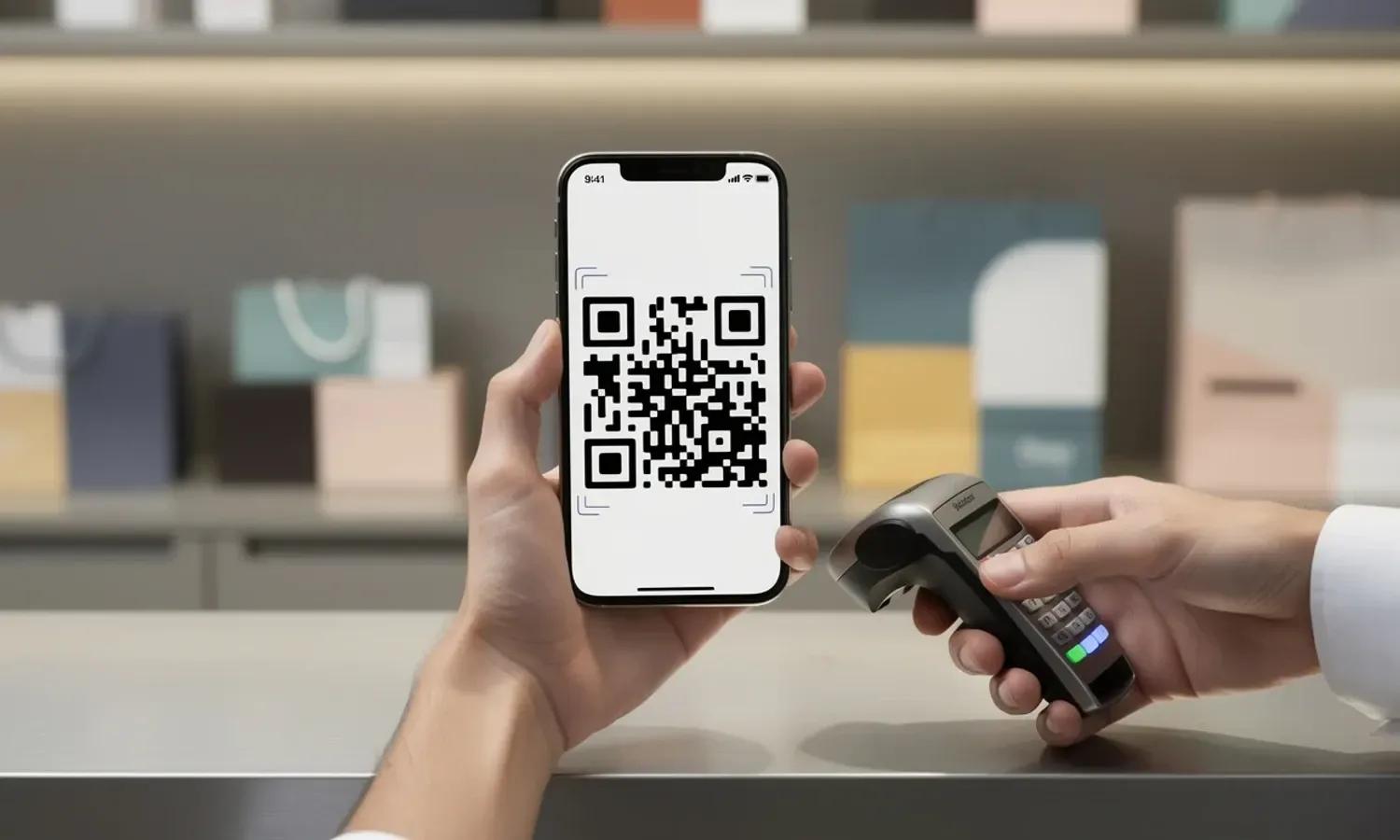
In-store POS integration presents different challenges. The interaction happens in a physical environment with queue pressure, variable staff familiarity with the programme, and a card terminal that may have limited display capability. The redemption flow needs to be fast enough that it doesn't create queue congestion, and it needs to be reliable enough that staff don't start discouraging its use because of technical problems at peak times. The customer-facing PIN pad or terminal should prompt the points application option clearly without requiring the member to navigate through multiple menus.
For omnichannel programmes where members move between physical and digital channels, the balance must be consistent in real time across all touchpoints. A member who checks their balance in the app and then walks into a store to redeem should see the same figure at both points. Any processing delay that creates a balance discrepancy between channels produces confusion and customer service contacts that are entirely avoidable with correct ledger architecture.
The final design consideration is minimum redemption thresholds in the context of channel economics. In-store redemptions have a higher processing overhead than digital ones, because they require a physical POS integration and staff involvement. Setting a minimum redemption threshold that is high enough to make the operational cost of the transaction worthwhile, while still being achievable for most members within a reasonable earn cycle, is a design decision that affects both programme economics and member satisfaction.