
Zero-Party Data in Retail: How to Collect It & Use It to Personalise Loyalty
The conversation around customer data has shifted considerably in the last few years. Where the debate once centred on how much data retailers could collect and from how many sources, it now centres on something more fundamental: how much of that data is actually trustworthy, and whether the methods used to collect it will survive the next wave of regulatory and platform-level restrictions. Zero-party data has emerged as the answer that resolves both questions at once, and loyalty programmes are proving to be the most effective vehicle for collecting it at scale.
What is Zero-Party Data?
Zero-party data is information that a customer intentionally and proactively shares with a brand. The term was coined by Forrester Research to distinguish it from data that is observed, inferred, or collected without the customer's direct participation. It includes stated preferences, declared purchase intentions, self-reported lifestyle attributes, and explicit communication opt-ins.
The defining characteristic is intent. When a customer completes a style quiz, sets product category preferences in a loyalty app, answers a post-purchase survey, or selects the types of offers they want to receive, they are actively contributing data to the brand relationship. No tracking, inference, or interpretation is required. The customer has told you directly what they want and how they want to be treated.
This directness is what separates zero-party data from every other data type. It is not inferred from behaviour, modelled from panel data, or purchased from an intermediary. It is volunteered, which gives it a fundamentally different legal and commercial status.
Zero-Party vs. First-Party vs. Third-Party Data
Understanding how zero-party data relates to other data categories is necessary before designing a collection strategy.
First-party data is behavioural and transactional data that a retailer collects directly from its own customer interactions. Purchase history, browsing patterns, email open rates, and redemption records are all first-party data. It is reliable and brand-owned, but it reflects what customers have done rather than what they want or intend to do. It must be inferred and interpreted to become actionable insight.
Third-party data is collected by external organisations, aggregated across many brands and touchpoints, and sold or licensed to retailers for targeting purposes. Its reliability is inherently limited because it involves inference at multiple removes from the original behaviour. Under UK GDPR and the trajectory of browser-level privacy restrictions, third-party data as a targeting mechanism has become progressively less viable and legally complex.
Zero-party data sits above both in quality and compliance posture. Because the customer actively provides it, it reflects declared intent rather than inferred probability. A customer who tells a clothing retailer that they shop primarily for occasion wear and prefer to hear about new arrivals rather than sale events has given that retailer more commercially useful information than months of browsing data could reliably produce. And because the data was voluntarily shared, the legal basis for processing it under UK GDPR is considerably cleaner.
Why Zero-Party Data is the Future of Retail Personalisation?
Three converging pressures have made zero-party data a strategic priority for UK retailers rather than a niche data science concern.
The first is regulatory. UK GDPR imposes strict requirements on the lawful basis for data collection and processing. Third-party data collected without clear consent from the data subject is increasingly difficult to use compliantly, and enforcement activity across the EU has demonstrated the scale of fines that follow non-compliance. Zero-party data, collected through transparent opt-in mechanisms where the customer understands what they are sharing and why, satisfies the consent and legitimate interest standards that regulators expect.
The second is technical. The deprecation of third-party cookies, combined with Apple's App Tracking Transparency framework and similar platform-level restrictions, has materially reduced the reach and accuracy of behavioural targeting that depends on cross-site tracking. Retailers that built their personalisation architecture on third-party data pipelines have found those pipelines degrading. Zero-party data is immune to these restrictions because it travels through a direct, consented relationship rather than a third-party tracking mechanism.
The third is commercial accuracy. A 2024 Twilio study found that while 81% of brands believe they understand their customers deeply, only 46% of consumers agree. The gap reflects the limits of inference. Behavioural data tells you what a customer bought; it does not tell you whether they bought it for themselves or as a gift, whether they were satisfied with it, or what they intend to buy next. Zero-party data fills those gaps with information that is accurate because it comes from the customer directly.
How to Collect Zero-Party Data Through Your Loyalty Programme?
A loyalty programme creates a structural context in which zero-party data collection is both natural and reciprocal. Members have already demonstrated a willingness to engage with the brand, and they understand that sharing more information leads to a better experience. The exchange of value, the reason they enrolled in the first place, makes them significantly more likely to respond to data-sharing mechanisms than cold or anonymous visitors.
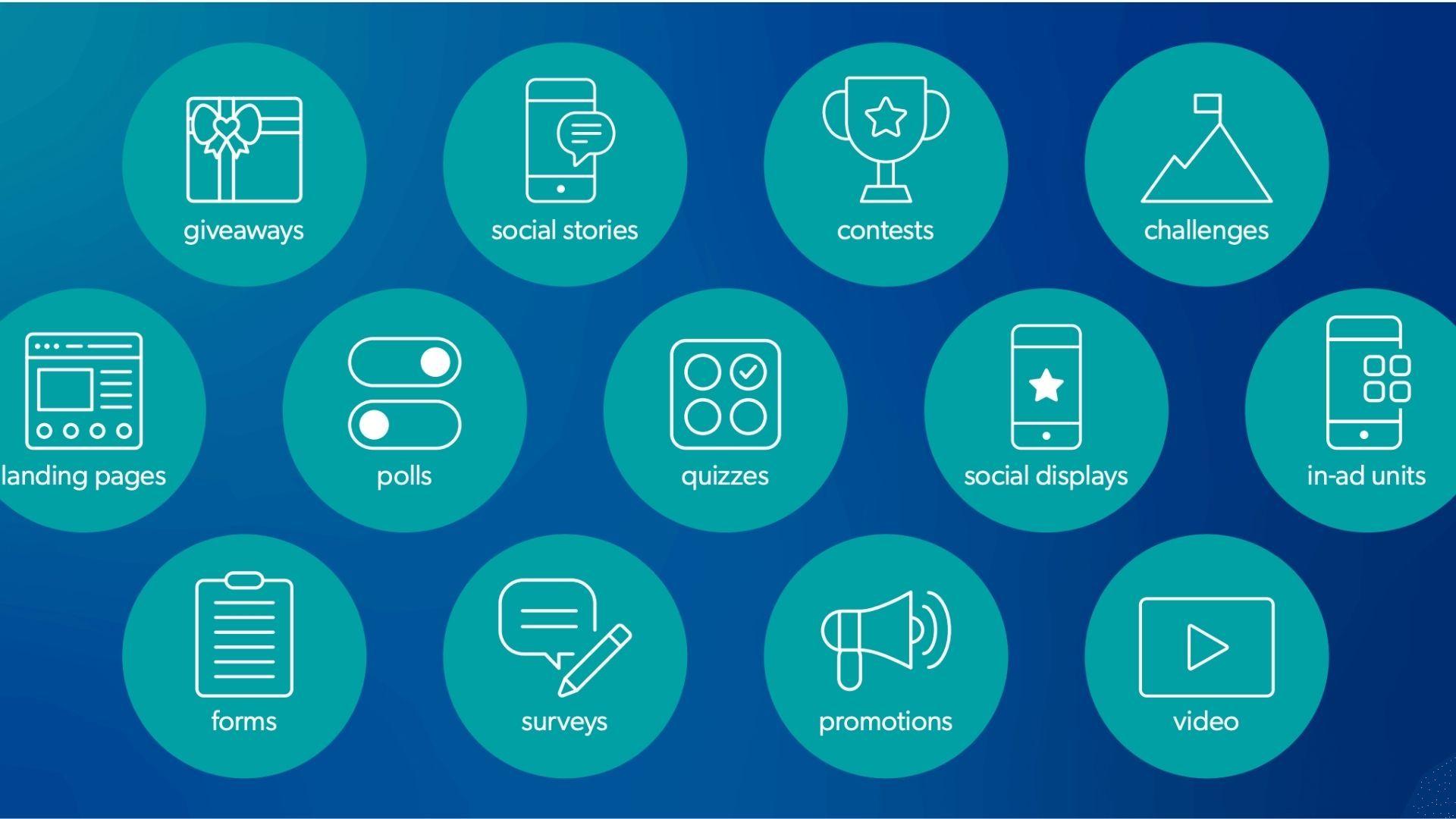
Preference centres at enrolment and beyond. The enrollment flow is the highest-intent moment in the customer lifecycle for data capture. A well-designed preference centre asks the member to declare their category interests, communication channel preferences, shopping frequency, and lifestyle attributes relevant to the product range. The critical design principle is to limit questions to those that will directly influence what the member receives. Asking questions that have no visible effect on communications erodes trust and future response rates.
Progressive profiling through the loyalty journey. Rather than collecting all preference data at once, progressive profiling distributes data requests across multiple touchpoints over time. A member who has been active for 60 days is more engaged and more likely to respond to a detailed preference survey than they were at enrolment. Trigger-based data requests, sent after a specific purchase type or at a loyalty milestone, feel contextually relevant rather than intrusive.
Interactive quizzes and product finders. Quizzes that help customers discover products suited to their needs serve a dual function: they deliver immediate value to the customer in the form of relevant recommendations, and they collect declared preference data that can be stored against the loyalty profile. A skincare brand asking customers about skin type, concerns, and routine complexity is collecting zero-party data through a mechanism that customers actively choose to engage with.
Post-purchase surveys and feedback prompts. Short, specific surveys sent after a transaction capture intent and satisfaction data that behavioural signals alone cannot provide. A question such as "Was this purchase for yourself or as a gift?" fundamentally changes how future recommendations should be framed. Delivered through a loyalty-linked communication with a reward incentive for completion, post-purchase surveys achieve substantially higher response rates than standalone research instruments.
Reward-gated preference updates. Awarding loyalty points for profile completion or preference updates creates a clear value exchange. Members understand that sharing more information earns them something tangible, which both increases participation rates and signals to the customer that their data has worth to the brand, reinforcing the reciprocal nature of the loyalty relationship.
Using Zero-Party Data to Power Hyper-Personalised Experiences
Collecting zero-party data without a defined activation plan is a data storage exercise, not a personalisation strategy. The commercial value lies entirely in how declared preferences are translated into differentiated customer experiences.
At the offer layer, zero-party data enables retailers to move from segment-level targeting to individual-level relevance. A member who has declared a preference for sustainable products should receive promotions from the retailer's sustainable range rather than generic sale events. A member who has stated they shop primarily for children's clothing should not receive the retailer's adult fashion newsletter. These exclusions are as important as the inclusions because irrelevant communications train members to disengage from the programme entirely.
At the product recommendation layer, declared preferences combine with purchase history to produce recommendations that are both behaviourally informed and explicitly aligned with what the customer has said they want. This combination addresses the core limitation of either data type in isolation: behaviour alone cannot account for intent, and declared preferences alone cannot account for actual category engagement patterns.
At the communication layer, zero-party data governs channel selection, content type, and frequency preferences. A member who has said they prefer SMS for time-sensitive offers and email for editorial content should receive their loyalty communications through exactly that channel split. Respecting stated communication preferences reduces opt-out rates and maintains the integrity of the contact database over time.
UK Retail Examples Using Zero-Party Data
UK retailers are at different stages of zero-party data maturity, but the direction of travel is consistent across the sector.
Marks & Spencer relaunched its Sparks programme with AI-driven personalisation at its core, using the programme's 18 million members as a data foundation. M&S introduced an AI style quiz that was used by over 450,000 members, collecting declared style and occasion preferences to inform personalised product recommendations. The quiz is a direct zero-party data collection mechanism embedded within the loyalty experience rather than bolted on as a separate research tool.
Boots Advantage Card uses its app-based preference settings to allow members to indicate health and beauty categories they are interested in, feeding personalised offers through the app rather than broadcasting the same promotions across all 17 million members. The declared category preferences govern which of the Boots promotional catalogue a member sees, reducing irrelevant communications and increasing offer redemption rates.
Holland & Barrett operates its Rewards programme with a health-goals preference mechanism at enrolment, asking members to declare their primary wellness objectives. The stated goal, whether weight management, sports nutrition, or general wellbeing, determines the product recommendations and content the member receives through the programme's digital touchpoints.
Privacy, Compliance & GDPR Considerations
Zero-party data is inherently more compliant than data collected through passive tracking, but the compliance advantage is not automatic. The legal basis under which it is collected and processed still requires the same rigour that applies to any personal data under UK GDPR.
The most important principle is purpose limitation. Data collected for one declared purpose, for example, personalising product recommendations, cannot then be shared with third-party advertisers without a separate and explicit consent basis. UK GDPR requires that personal data be collected for specified, explicit, and legitimate purposes and not further processed in a way incompatible with those purposes. Retailers must map the declared use of zero-party data against their actual processing activities and ensure the two are aligned.
Transparency in the collection mechanism is the second requirement. Customers must be clearly informed at the point of collection what data is being captured, how it will be used, and how long it will be retained. A preference centre that captures declared lifestyle data should include a clear, plain-language explanation of its purpose rather than burying the information in a privacy policy accessible only through a link.
Data subject rights apply to zero-party data in the same way as any other personal data. Members must be able to access, correct, and delete the preferences they have shared. This requires a technical architecture in which zero-party data attributes are stored in a retrievable and editable format within the customer profile rather than locked inside a campaign tool or analytics platform that cannot surface individual records on request.
Finally, consent obtained at enrolment has a shelf life. Preferences declared two years ago may no longer reflect a member's current needs. Periodic re-confirmation of key preference data, built into the loyalty programme's annual communication calendar, maintains the accuracy and compliance status of the zero-party data asset over time.