
Customer Attrition in Ecommerce: What It Is, Why It Happens & How Loyalty Turns the Tide
Ecommerce makes it easier than ever for customers to find you. It also makes it easier than ever for them to leave. A shopper who once felt loyal to a local shop now has hundreds of competitors a click away, and the switching cost is effectively zero. In that environment, customer attrition is not just a performance metric. It is a direct measure of how much revenue your brand is quietly haemorrhaging every month.
Understanding attrition in detail, what drives it, how to spot it early, and specifically how loyalty infrastructure counters it, is one of the highest-leverage activities an ecommerce team can prioritise. The numbers reinforce this urgency: acquiring a new customer costs anywhere from five to seven times more than retaining an existing one, and research from Bain & Company confirms that a 5% improvement in retention can increase profits by 25% to 95%.
What Is Customer Attrition?
Customer attrition is the process by which a business loses customers over a given period. In ecommerce, it describes the gradual or sudden reduction in the pool of active buyers: shoppers who purchased once and never returned, subscribers who cancelled, or previously loyal customers who quietly drifted to a competitor.
Unlike subscription businesses where cancellation creates a clear timestamp, attrition in non-subscription ecommerce is often invisible until it has already compounded. A customer who bought three times last year and made no purchases this year has technically attrite, but there was no cancellation event to trigger an alert. This passive form of loss is particularly costly because it tends to be identified retrospectively, long after the window for intervention has closed.
Attrition is also not uniformly distributed. High-value customers who generate a disproportionate share of revenue carry far greater financial consequences when they leave than occasional buyers. Treating all attrition as equivalent leads to misallocated retention effort and wasted budget.
Customer Attrition vs. Churn: Is There a Difference?
The two terms are used interchangeably across most marketing literature, and for the majority of practical purposes they describe the same thing: customers who stop transacting with a business. Where a distinction is occasionally drawn, it tends to follow this logic: attrition refers to losses that occur for reasons partially outside the business's control, such as a customer moving abroad, outgrowing a product category, or experiencing a change in life circumstances. Churn, by contrast, is sometimes reserved for losses that reflect a deliberate decision to stop engaging, often prompted by a negative experience, a better competitor offer, or unresolved dissatisfaction.
In ecommerce practice, the distinction rarely changes what you measure or how you respond. Both need to be tracked, both need to be segmented by cause where possible, and both represent revenue that the business cannot afford to ignore. Whether the label is attrition or churn, the strategic question remains identical: how do you reduce the rate at which customers stop buying from you?
How to Calculate Your Customer Attrition Rate
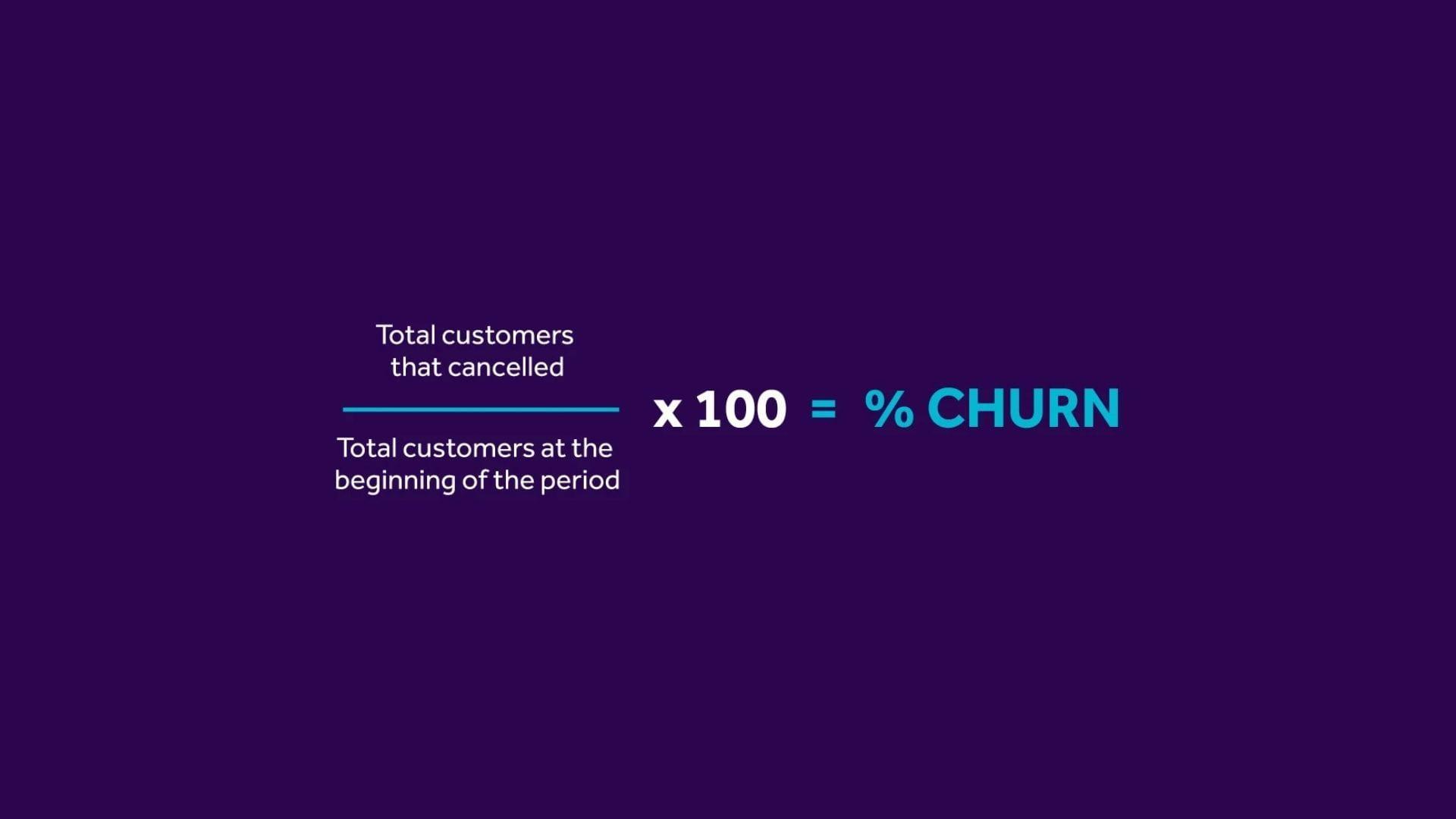
The standard formula is straightforward. Take the number of customers lost during a period, divide it by the total number of customers at the start of that period, and multiply by 100 to express it as a percentage.
Attrition Rate = (Customers Lost During Period / Customers at Start of Period) x 100
If you started a quarter with 8,000 customers and ended with 7,200, losing 800 in total, your attrition rate for that quarter is 10%. Applied annually, that would mean losing roughly a third of your customer base every year, which illustrates why even seemingly moderate monthly rates compound into severe long-term damage.
The more useful refinement is to define what "lost" actually means for your specific business. A sensible approach is to identify a purchase recency threshold based on your typical buying cycle. If your average customer buys every 60 days, someone who has gone 180 days without a purchase is a strong attrition candidate. Setting this threshold deliberately, rather than arbitrarily, gives the metric operational meaning rather than just statistical interest.
Root Causes of Customer Attrition in Ecommerce
Post-purchase experience failure is the single largest driver of preventable attrition. Research consistently shows that the majority of customers who leave a brand do so because of a poor experience rather than price. A 2024 study cited by rethinkCX found that 67% of customers left a business due to poor service, with slow resolution times and unresolved issues cited most frequently.
Competitive pricing is the second major factor. In categories where products are commoditised and comparison is easy, a competitor offering the same item at a 10% discount faces minimal switching friction. Price-driven attrition is harder to address through experience improvements alone and typically requires a value proposition that extends beyond the product itself.
Lack of personalisation compounds both problems. Customers who receive generic communications that bear no relationship to their purchase history or preferences feel functionally invisible to the brand. That invisibility erodes the emotional connection that keeps buyers returning even when a cheaper alternative is available.
Finally, checkout friction, fulfilment inconsistency, and poor returns handling each contribute to attrition in meaningful proportions. A single negative delivery experience, particularly one that is handled poorly by customer service, can undo months of positive brand-building with a customer who would otherwise have remained loyal.
Early Warning Signals of Attrition
Attrition that is caught early is addressable. Attrition that is identified retrospectively is a sunk cost. The leading indicators that a customer is drifting toward disengagement include declining email open rates, longer gaps between purchases relative to that customer's personal baseline, reduced session frequency in app or on site, and a drop in average order value across successive transactions.
Cart abandonment rate at the individual customer level is also a useful signal. A customer who historically completed purchases but is now abandoning at checkout has encountered something that is creating friction, whether that is price sensitivity, trust concerns, or a competing offer. That behaviour warrants a targeted intervention before it solidifies into departure.
Customers who recently contacted support about an unresolved issue represent a particularly acute at-risk segment. Research from Forrester, via Zendesk, shows that customers are 2.4 times more likely to remain with brands that resolve problems quickly. The inverse also holds: customers whose issues were handled slowly or inadequately are significantly more likely to leave within the following 90 days.
Tracking these signals requires a customer data infrastructure that surfaces behavioural changes at the individual level rather than in aggregate. Aggregate metrics mask the individual attrition events that add up to a significant revenue problem over time.
How Loyalty Programmes Prevent Customer Attrition
A well-designed loyalty programme creates what behavioural economists call sunk cost commitment: a customer who has accumulated points, achieved a tier status, or earned an unredeemed reward has a concrete financial reason to return that a customer without a programme does not. This structural stickiness is one of the most reliable mechanisms for reducing attrition in ecommerce.
The data on programme effectiveness is substantial. Loyalty programme members show 47% lower churn rates than non-members, and members who actively redeem rewards spend 3.1 times more annually than those who do not. Across well-structured programmes, top performers achieve up to 7.2x ROI through the combined effect of reduced churn, increased purchase frequency, and higher basket values.
Personalisation within the programme amplifies these effects. Personalised rewards increase loyalty programme engagement by four times compared to generic discount offers. A customer who receives a reward that reflects their actual purchase history and preferences experiences the programme as a genuine relationship rather than a mass marketing mechanism, which creates emotional loyalty that survives competitor price promotions.
Tiered structures add a further dimension. Customers who have reached a higher tier and stand to lose those benefits through inactivity face a meaningful perceived cost of switching.
Building an Attrition Prevention Workflow
Prevention workflows are most effective when they operate on segmented audiences rather than applying blanket retention tactics to the entire customer base. The starting point is defining risk tiers: customers who are showing early warning signals but have not yet lapsed, customers who are approaching the lapse threshold, and customers who have passed it but remain within a reactivation window.
Each tier requires a different intervention. Early-stage at-risk customers typically respond to personalised communications that acknowledge their relationship with the brand and surface relevant product recommendations based on their purchase history. These interventions should feel like genuine engagement, not a panic promotion.
Customers approaching the lapse threshold are candidates for incentive-based reactivation: a reward redemption reminder, a time-limited bonus points offer tied to their next purchase, or early access to a new product in a category they have bought from before. The key is that the incentive is specific enough to feel personal rather than mechanical.
For recently lapsed customers, win-back campaigns with a compelling reason to return outperform generic discount blasts consistently. Acknowledging that you have noticed their absence, if done without being intrusive, signals to the customer that the brand was paying attention to them as an individual rather than treating them as an anonymous revenue unit.
Measuring the Financial Impact of Reducing Attrition
The business case for attrition reduction becomes concrete when it is translated into revenue terms. The most direct calculation takes your average customer lifetime value and multiplies it by the number of customers prevented from lapsing. If your average CLV is £180 and a prevention campaign retains 200 customers who would otherwise have churned, the revenue protected is £36,000 from that single cohort.
Customer lifetime value itself is calculated by multiplying average order value by purchase frequency and then by the average customer lifespan. A customer who spends £45 per order, buys four times per year, and stays active for three years has a CLV of £540. Retaining that customer for an additional year by resolving an attrition risk adds £180 of pure revenue without any acquisition cost attached to it.
The comparison against acquisition cost is the argument that tends to resonate most with finance teams. When a new customer now costs an average of £29 to acquire versus the £9 it cost a decade ago, the relative value of retention compounds dramatically. A loyalty programme that costs £5 per active member annually and prevents meaningful attrition among high-value customers will almost always generate a superior return to the same budget spent on paid acquisition.
The 90-day retention rate deserves particular attention as a forward-looking metric. Customers who stay active for 90 days after their first purchase are 3.5 times more likely to remain active for a full year. Improving that early retention window, through strong onboarding, prompt first-purchase follow-up, and an immediate loyalty enrolment invitation, has an outsized effect on the long-term attrition rate without requiring significant incremental spend. This is where the financial case for loyalty closes itself.