
Loyalty Marketing: A Complete Guide for UK Retailers in 2026
A loyalty programme that sits in a database without an active marketing strategy around it is, at best, an administrative overhead. The programme creates the structure, the earn mechanics, the reward tiers, the redemption logic, but loyalty marketing is what fills that structure with customer activity. It is the discipline that determines whether enrolled members actually engage, whether lapsed members return, and whether the programme generates measurable commercial impact rather than simply accumulating sign-ups.
In 2026, the UK retail loyalty landscape has matured considerably. With over 80% of British consumers now enrolled in at least one loyalty scheme, programme proliferation has made passive membership the default. Retailers that win on loyalty are those investing not just in programme design, but in the ongoing marketing execution that keeps their programmes relevant and their members active.
What is Loyalty Marketing?
Loyalty marketing is the practice of using targeted communications, incentives, and personalised experiences to deepen the commercial relationship between a brand and its existing customer base. It is distinct from acquisition marketing in its audience (enrolled members rather than prospects), its data foundation (behavioural and transactional customer data rather than third-party targeting), and its success criteria (retention, frequency, and lifetime value rather than cost per acquisition).
At its operational core, loyalty marketing encompasses three functions. The first is lifecycle communication: reaching customers at defined moments in their relationship with the brand — welcome, post-purchase, re-engagement, anniversary with messaging that is relevant to their current status and behaviour. The second is promotional activation: using the programme's reward mechanics to drive specific commercial outcomes at defined points in the calendar. The third is relationship management: building the kind of ongoing familiarity and perceived reciprocity that makes customers choose a brand habitually rather than transactionally.
The distinction matters because it shapes how resources are allocated. Loyalty marketing requires a different team structure, technology stack, and measurement framework from acquisition marketing. Conflating the two typically results in both being done poorly.
Loyalty Marketing vs. Traditional Marketing
Traditional retail marketing operates on a broadcast model. A campaign is built around a message, deployed to the widest feasible audience, and measured on reach, impression share, and conversion rate from cold or warm audiences. The customer relationship is largely incidental, the goal is to prompt a transaction, not to build a durable commercial relationship.
Loyalty marketing inverts this model. The audience is pre-defined and consented. The data available is first-party and behavioural, meaning communications can be calibrated to individual purchase history, category affinity, redemption patterns, and lifecycle stage rather than demographic approximation. The goal of any given campaign is not merely to generate a transaction but to strengthen the relationship that will generate the next five.
The commercial implications differ accordingly. Traditional marketing scales by increasing budget: more spend produces more reach, which produces more conversions. Loyalty marketing scales by increasing data depth and personalisation precision: the same communication infrastructure, applied to progressively richer customer data, produces higher engagement rates without requiring proportional budget increases. This is why the unit economics of loyalty marketing tend to improve over time while traditional acquisition economics typically worsen as audience saturation and competition for attention increase.
The practical limitation of loyalty marketing is its ceiling. It cannot replace acquisition; a shrinking enrolled base will eventually exhaust the commercial potential of even the most sophisticated member engagement strategy. Loyalty marketing works best as a complement to acquisition investment, not a substitute for it.
Key Loyalty Marketing Channels
Email and SMS
Email remains the foundational channel of loyalty marketing in UK retail, and for good reason. It supports long-form communication, rich visual content, complex personalisation logic, and detailed performance measurement. For loyalty-specific use cases — balance updates, tier progress notifications, expiry reminders, tailored offer delivery — email provides the depth and flexibility that no other channel matches at comparable cost.
SMS occupies a structurally different role. Its value lies in immediacy rather than richness. Open rates for SMS consistently exceed 90%, and the majority of messages are read within three minutes of receipt. This makes it the appropriate channel for time-sensitive loyalty communications: flash reward events, same-day threshold nudges, or real-time point confirmations that lose relevance if delivered hours later via email.
The interaction between the two channels is where the most effective loyalty marketing programmes operate. Email carries the relationship content — detailed reward statements, category-relevant offers, tier benefit explanations — while SMS provides the tactical urgency layer that drives in-the-moment action. According to research from Attentive's 2025 UK report, 80% of UK consumers feel more connected to brands that understand their individual needs, and 78% are more likely to purchase when presented with relevant, behaviour-based suggestions. Channel separation — using each medium for what it does best — is the operational discipline that produces those outcomes.
GDPR compliance governs both channels in the UK, and consent management is a non-negotiable prerequisite. Loyalty programmes that collect explicit marketing consent at enrolment, and that maintain granular preference records by channel and content type, have a cleaner and more commercially productive communication audience than those that treat opt-in as a single binary.
Push Notifications
App-based push notifications are the fastest-growing loyalty marketing channel in UK retail, driven by the expansion of retailer apps and the growing proportion of loyalty interactions happening on mobile. Their commercial role sits between SMS and email: more immediate than email, but capable of carrying richer content than a standard SMS.
The most effective push notification strategies in loyalty marketing are event-driven rather than scheduled. A notification triggered by a customer crossing a reward threshold, approaching tier expiry, or being in proximity to a physical store location carries far higher relevance and engagement than a broadcast message sent to all app users at a fixed time. This trigger-based architecture requires integration between the loyalty platform and the push delivery system, so that customer status changes in the programme fire communication events in real time.
Permission management for push is an ongoing operational requirement. Unlike email, where re-permission flows exist, a push opt-out cannot easily be reversed. Maintaining notification relevance, sending fewer, more precisely targeted messages rather than high-volume generic alerts, is the primary lever for protecting opt-in rates over time.
In-Store Activation
Physical retail environments represent an underutilised channel for loyalty marketing, particularly in the UK where omnichannel shopping behaviours remain dominant. In-store activation covers the full range of touchpoints at which a customer's loyalty status can be recognised, surfaced, and acted upon during a physical visit.
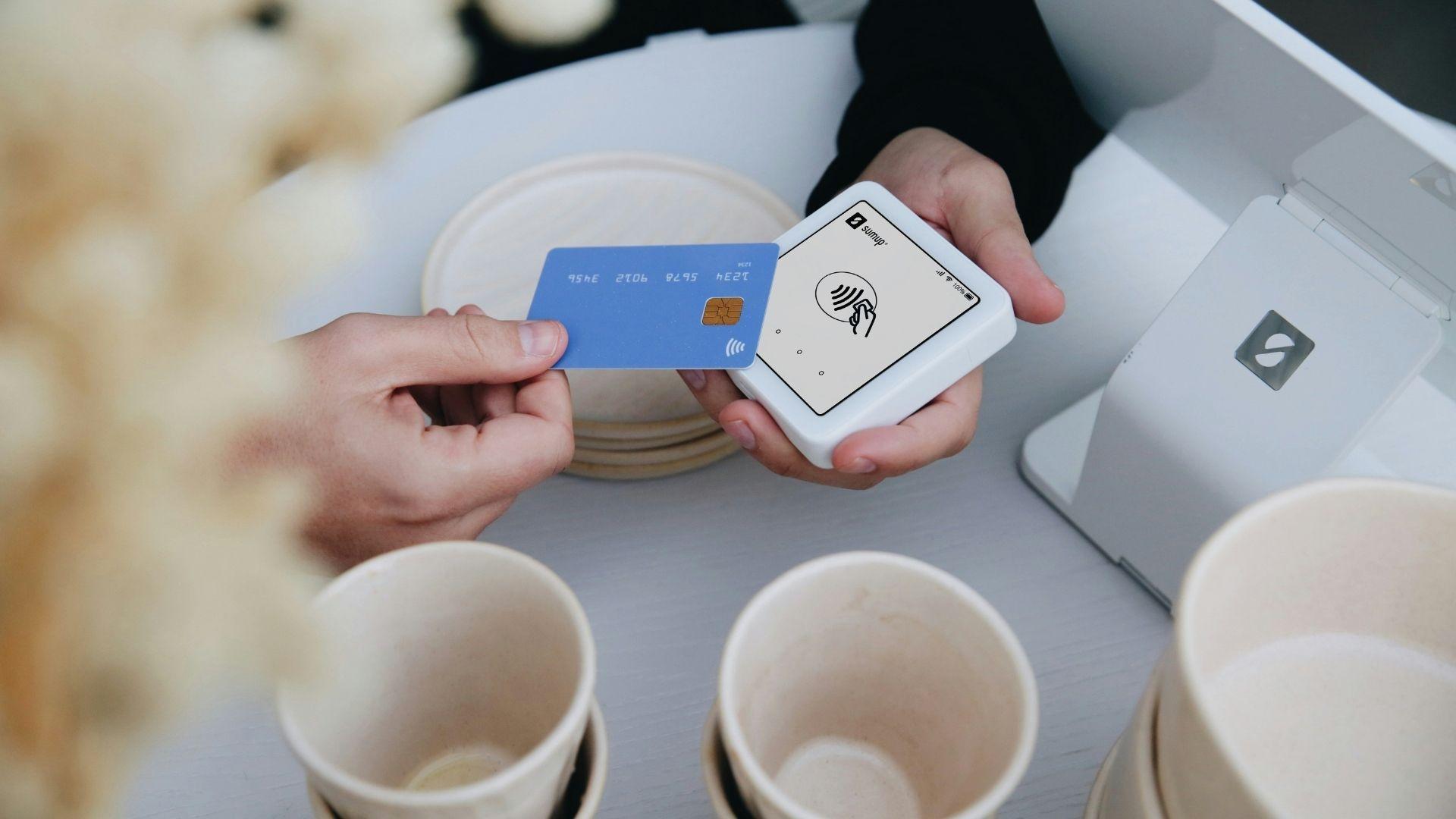
At the point of sale, this means real-time balance display, personalized offer application, and staff-initiated conversations about reward status or upcoming promotions. Beyond the till, it includes physical collateral that communicates tier benefits, digital screens that surface member-only pricing, and app-based in-store features such as scan-and-go with integrated loyalty earn. Morrisons, for example, has invested in digital screens across Market Street food counters that allow brands to reach loyalty members with contextually relevant messages in specific store zones, a more sophisticated application of in-store loyalty activation than simple signage.
The data challenge of in-store activation is identification. Unlike digital channels, where the customer's identity is established by login, in-store loyalty recognition requires either card presentation, app scan, or card-linked payment. Programmes that reduce the friction of in-store identification, through app-based barcode scanning, NFC integration, or automatic card-linked recognition, consistently show higher in-store loyalty transaction rates and richer purchase data for subsequent personalisation.
Personalisation as the Engine of Loyalty Marketing
If loyalty marketing is the discipline that keeps members engaged, personalisation is the mechanism through which it earns that engagement rather than simply demanding it.
Generic loyalty communications, the same offer sent to all members regardless of purchase history, category affinity, or lifecycle stage, produce diminishing returns quickly. Members learn that their membership status has no bearing on the relevance of what they receive, and engagement rates reflect that. Personalised communications, by contrast, demonstrate that the brand is using the data it has collected to deliver genuine value to the individual.
In practical terms, personalisation in loyalty marketing operates across several dimensions. Offer personalisation uses purchase history to surface rewards on products a customer has demonstrable affinity for, rather than running blanket promotions on slow-moving stock. Timing personalisation uses individual engagement patterns to deliver communications when a specific member is most likely to open and act, rather than sending at a uniform schedule. Lifecycle personalisation adjusts message content and incentive depth to the customer's current engagement level, a different communication for a recently enrolled member, an active redeemer, a member approaching tier drop, and a lapsed member who has not transacted in 90 days.
The data infrastructure required to deliver this at scale is a customer data platform or an equivalent unified profile system that aggregates transactional, behavioural, and programme data into a single record accessible by all communication channels. UK retailers including Marks & Spencer, Tesco, and Boots are actively investing in AI-driven personalisation layers on top of their loyalty data, using predictive models to anticipate next-best offer, optimal channel, and intervention timing rather than relying on manually constructed rules. Adobe's 2025 UK Digital Trends report found that 71% of UK consumers expect brands to anticipate their needs with personalised offers, making this investment a competitive baseline rather than a differentiator.
Building a Loyalty Marketing Calendar
A loyalty marketing calendar provides the operational structure that prevents programme communications from being reactive, fragmented, or in conflict with broader brand activity. It maps the full year's planned loyalty touchpoints against the retail trading calendar, category launch schedule, and competitive landscape.
An effective calendar operates on three planning horizons simultaneously. The annual horizon maps the strategic promotional moments, Black Friday, Christmas, January sales, summer, against which loyalty activation will be planned and budgeted. The quarterly horizon allocates campaign resources, defines segment priorities, and establishes the earn event schedule. The monthly or weekly horizon governs execution: which segments receive which messages through which channels on which dates, along with the trigger-based communication flows running in the background.
The loyalty-specific elements of the calendar that most retailers underplan are the lifecycle communications. Welcome sequences for new enrolments, re-engagement flows for members approaching lapse, and tier-change notifications are not seasonal campaigns, they run continuously, triggered by individual customer behaviour. Building these flows into the calendar as always-on infrastructure, rather than treating them as one-off projects, ensures they are maintained, tested, and optimised over time rather than launched once and forgotten.
Measuring Loyalty Marketing Effectiveness
Loyalty marketing effectiveness is measured at two levels: campaign-level performance and programme-level commercial impact.
At the campaign level, the core metrics are open rate and click-through rate by channel, offer redemption rate, incremental purchase rate among recipients versus a holdout group, and revenue per communication sent. The holdout comparison is essential: without it, positive response rates cannot be separated from customers who would have purchased anyway.
At the programme level, the metrics that matter are active member rate (the proportion of enrolled members who have transacted in the past 90 days), member versus non-member AOV and purchase frequency, redemption rate as a proportion of reward liability issued, and loyalty programme contribution to total revenue.
One measurement discipline that separates mature loyalty marketing programmes from immature ones is the consistent use of control groups. Every significant campaign should exclude a randomised segment of the target audience from receiving the communication, and commercial outcomes for this holdout group should be tracked alongside the exposed group. Without this practice, it is impossible to distinguish the incremental effect of loyalty marketing from the underlying behaviour of an already-engaged customer base, a distinction that matters considerably when justifying programme spend to commercial leadership.
Loyalty marketing in 2026 is a technical discipline as much as a creative one. The retailers that will lead are those who combine a clear structural understanding of their channels and data with the operational rigour to execute personalised, well-timed, and properly measured communications at scale. The programme creates the relationship framework. Loyalty marketing is what makes the relationship work.