
How FMCG Companies Build Customer Loyalty: Strategies from the World's Leading Consumer Brands
In most industries, a loyalty programme is straightforward to deploy: track purchases, reward repeat buyers, refine the offer. In fast-moving consumer goods, the same ambition runs into a wall that most sectors never have to climb. The products are purchased weekly, sometimes daily, but the brand almost never meets the buyer. A packet of washing powder changes hands at a supermarket checkout, a protein bar gets scanned at a convenience till, a shampoo is added to an online grocery basket — and in each case the retailer absorbs the transaction data, not the manufacturer. This structural disconnect sits at the heart of why loyalty in FMCG is both more important and more difficult than anywhere else in consumer commerce.
This article examines how the world's leading FMCG companies are working around that constraint, what specific tactics are generating measurable results, and what smaller brands can realistically borrow from playbooks written by giants with billion-dollar marketing budgets.
Why FMCG Companies Struggle with Loyalty
The fundamental problem is one of visibility. Unlike a hotel, a bank, or even a coffee chain, an FMCG brand has no inherent mechanism to identify who bought its product, when they bought it, or how often they return. The relationship is mediated entirely by the retailer, who captures the transactional data and, quite reasonably, treats it as a competitive asset rather than something to share upstream.
This creates a data gap that is genuinely structural. A brand selling through Tesco or Carrefour sees aggregate shipment volumes and, if it is lucky, some anonymised scanner data from the retailer's loyalty scheme. It does not see individual purchase histories. It cannot distinguish a loyal customer from a price-driven switcher. It has no way of knowing whether a promotional uplift in week one is driving genuine repeat purchase in week eight, or simply generating one-off pantry loading.
The problem is compounded by the economics of the category. FMCG products are low-cost, high-frequency purchases in which the switching cost is functionally zero. A consumer who switches from Brand A to a retailer's own-label variant loses nothing — no accumulated points, no membership tier, no sunk investment. Competitive research from Symphony AI suggests that only around 18% of shoppers are genuinely brand loyal in a given category, yet that cohort generates disproportionate value, accounting for roughly 41% of total sales volume. The task for FMCG marketers is to identify, cultivate, and protect that 18% rather than spending the entire budget trying to convert price-driven switchers who will move on the moment a competitor runs a deeper promotion.
DTC brands have been exploiting this vulnerability for over a decade. Gillette's US market share fell from around 70% in 2010 to closer to 50% within a few years, largely because Dollar Shave Club and Harry's built direct customer relationships that Gillette, selling through mass retail, simply could not match. The same pattern has repeated across personal care, nutrition, and household goods. Consumer expectations around personalisation have risen sharply, and the intermediary model makes delivering on those expectations extraordinarily difficult.
The Role of Brand Equity in FMCG Loyalty
Before discussing programmes and mechanics, it is worth being clear about what holds loyalty together in FMCG when no formal programme exists. The answer, historically, has been brand equity: the cumulative value of a brand's reputation, emotional associations, and perceived quality premium in the mind of the consumer.
Brand equity acts as a loyalty buffer. A consumer who trusts Dove will not immediately switch after one disappointing experience. A household that has used Persil for twenty years has genuine inertia on its side. This passive loyalty, rooted in familiarity and habit, is not the same as active, data-driven loyalty programme engagement, but it is the foundation on which every FMCG loyalty strategy is built.
The risk for established brands is that brand equity erodes quietly. Private label quality has improved substantially across most supermarket categories over the past decade, compressing the perceived quality gap that historically justified paying a brand premium. Simultaneously, the proliferation of challenger brands — many of them digitally native, purpose-driven, and refreshingly direct in how they communicate — has raised the bar for emotional resonance. A brand that is merely familiar is increasingly vulnerable; one that is trusted, relevant, and personally meaningful is substantially more defensible.
This is why the most strategically coherent FMCG loyalty approaches do not treat programme mechanics in isolation. Cashback and reward schemes can generate incremental purchase frequency, but they cannot compensate for a brand that consumers feel indifferent about. The strongest loyalty strategies reinforce brand equity rather than substituting for it.
How Leading FMCG Companies Approach Loyalty
Unilever's Loyalty Strategy
Unilever's approach is instructive precisely because it reflects how a company with 30 power brands generating over 75% of its revenue thinks about loyalty at scale. Rather than building a single loyalty programme that spans its entire portfolio — an approach that would be operationally impossible and strategically incoherent — Unilever has focused its loyalty thinking at the brand level while building shared data infrastructure at the corporate level.
The strategic pivot that defines Unilever's current direction is its commitment to becoming genuinely omnichannel. Its Global Head of Digital Commerce Strategy has been explicit about the fact that traditional shopper marketing — in-store activations, trade promotions, retailer co-op activity — and digital-first engagement are no longer separable disciplines. Consumers move fluidly between channels, and the brand experience must remain consistent whether a shopper encounters it on TikTok, in a product listing on a retailer's app, or standing in front of a shelf fixture.
To support this, Unilever has built first-party data capabilities through retail media partnerships, loyalty programme integrations with key retail partners, and contextual data capture across its owned digital properties. The company partnered with retailers to access transactional data at a level of granularity it could not achieve independently, using those insights to refine targeting and measure the downstream effect of its brand and performance marketing. Simultaneously, its media mix has been shifting substantially toward social and influencer channels — with plans to move from 30% to 50% social media in its overall media mix — because those channels generate the direct consumer engagement signals that traditional above-the-line advertising cannot.
At the brand level, Dove's Real Beauty campaign is the clearest example of how Unilever builds loyalty through emotional connection rather than transactional incentive. The campaign created a long-running conversation about self-image and body confidence that gave Dove a defensible positioning no price promotion can replicate. Consumers who align with Dove's values do not simply buy the product — they identify with it, share it, and advocate for it. That is a qualitatively different form of loyalty from a points balance.
P&G's Personalisation Approach
Procter and Gamble occupies a distinctive position in the FMCG loyalty conversation because it has been, for the better part of a decade, the company that others are trying to emulate. Its strategy is built on a relatively simple but rigorously executed principle: find savings everywhere in the organisation, and redirect every available pound into targeted consumer media and product innovation that is genuinely differentiated.
The personalisation dimension of P&G's approach has been accelerated by its investment in data science and artificial intelligence. The company's collaboration with Google Cloud has focused on using machine learning and advanced analytics to drive more connected, personalised consumer experiences across its brand portfolio. The goal is to move away from broad demographic targeting toward genuine individual-level relevance — serving a new parent different content for Pampers than it serves a parent with school-age children, or tailoring Gillette messaging based on a consumer's demonstrated preferences and purchase frequency.
P&G's Supply Chain 3.0 initiative, which is expected to generate approximately $1.5 billion in savings, is relevant to loyalty because it frees budget for consumer-facing investment. A company that is operationally efficient can sustain higher marketing intensity without sacrificing margin — which means it can afford to maintain the brand visibility and media presence that keeps its products top of mind at the moment of purchase. In a category where loyalty is partly habitual, consistent brand visibility is itself a loyalty mechanism.
P&G has also invested in direct-to-consumer infrastructure across several of its brands, recognising that the data advantage of owning the transaction is too significant to ignore. The company opened DTC channels for brands including Gillette and several personal care lines, enabling it to build genuine customer profiles, test personalised offers, and develop subscription mechanics that generate predictable revenue outside the retailer relationship.
Nestle's DTC and Data Play
Nestle's loyalty strategy is perhaps the most explicitly data-driven of the three. The company has invested heavily in DTC platforms across several of its key brand categories, and its rationale is straightforward: the consumer insight generated by owning a direct transaction is categorically richer than anything derived from aggregate retailer data.
The MyGerber Baby loyalty programme, operated through Gerber's DTC store, illustrates the approach at the brand level. Parents are incentivised to purchase directly — and to share detailed information about their child's age, dietary preferences, and developmental stage — in exchange for personalised product recommendations, exclusive offers, and specialist content. The programme turns a commodity purchase into an ongoing relationship grounded in highly relevant, individualised value exchange.
At the corporate level, Nestle has been expanding its digital capabilities with significant investment. The company launched a major data quality initiative to address inconsistencies across its global data infrastructure, reportedly improving marketing return on investment by 20% within six months by enabling more precise attribution and audience targeting. Its digital marketing approach now includes platform-specific content across Instagram, TikTok, and YouTube, with influencer partnerships calibrated to each brand's audience demographic rather than a generic tier-based selection process.
Nestle's Collect programme reflects a sustainability-oriented loyalty mechanic that is increasingly relevant to contemporary consumers: rewarding them for recycling packaging. This connects the brand's environmental commitments to individual consumer behaviour in a tangible, incentivised way — a purposeful loyalty mechanic that generates both data and goodwill simultaneously. Nestle has also been developing AI-powered tools such as Hellmann's Meal Reveal, which uses machine learning to suggest personalised recipe ideas based on fridge contents. These tools create habitual engagement that extends well beyond the moment of purchase, embedding the brand into the consumer's daily domestic routine.
FMCG Loyalty Tactics That Work
Shopper Marketing Programmes
Shopper marketing sits at the intersection of brand equity and in-store execution, and when done well, it does double duty: it supports retailers by driving footfall and basket size, and it supports brands by maintaining visibility and relevance at the moment when purchase decisions are made. The most effective shopper marketing programmes are those that integrate digital and physical touchpoints rather than treating them as separate campaigns.
Receipt scanning has become one of the most widely adopted data-capture mechanisms in the sector precisely because it solves the retailer mediation problem without requiring a direct retail partnership. A consumer who photographs their till receipt and uploads it to a brand's app or loyalty portal is voluntarily sharing transactional data that would otherwise be invisible to the manufacturer. The data gained includes not just which of the brand's products were purchased, but often also what competitor products appeared in the same basket, which retail channels the consumer uses, and how frequently they shop.
QR codes on packaging and in-store activations serve a similar bridging function. They create a physical-to-digital connection that turns a passive shelf browse into an active engagement point. Brands that run QR-linked promotions consistently report that the consumers who redeem are disproportionately high-value, frequent purchasers — the core loyalist group that the data gap has historically made invisible.
Cashback and Reward Mechanics
Cashback programmes remain one of the most popular FMCG loyalty mechanics, and for comprehensible reasons: they are easy to communicate, straightforward to redeem, and directly address the price sensitivity that characterises the category. A programme that returns a proportion of spend in cash or in-store credit gives consumers a concrete reason to consolidate purchases with a single brand rather than spreading them across alternatives.
The limitation of pure cashback mechanics, however, is that they attract price-sensitive switchers as readily as genuine brand loyalists. A consumer who joins a cashback programme because a promotion appears in their inbox is not necessarily committed to the brand — they are committed to the reward, and the moment a competitor offers a better one, they will switch. The most effective reward mechanics therefore combine transactional incentives with experiential or emotional components that create a sense of belonging rather than merely a sense of value.
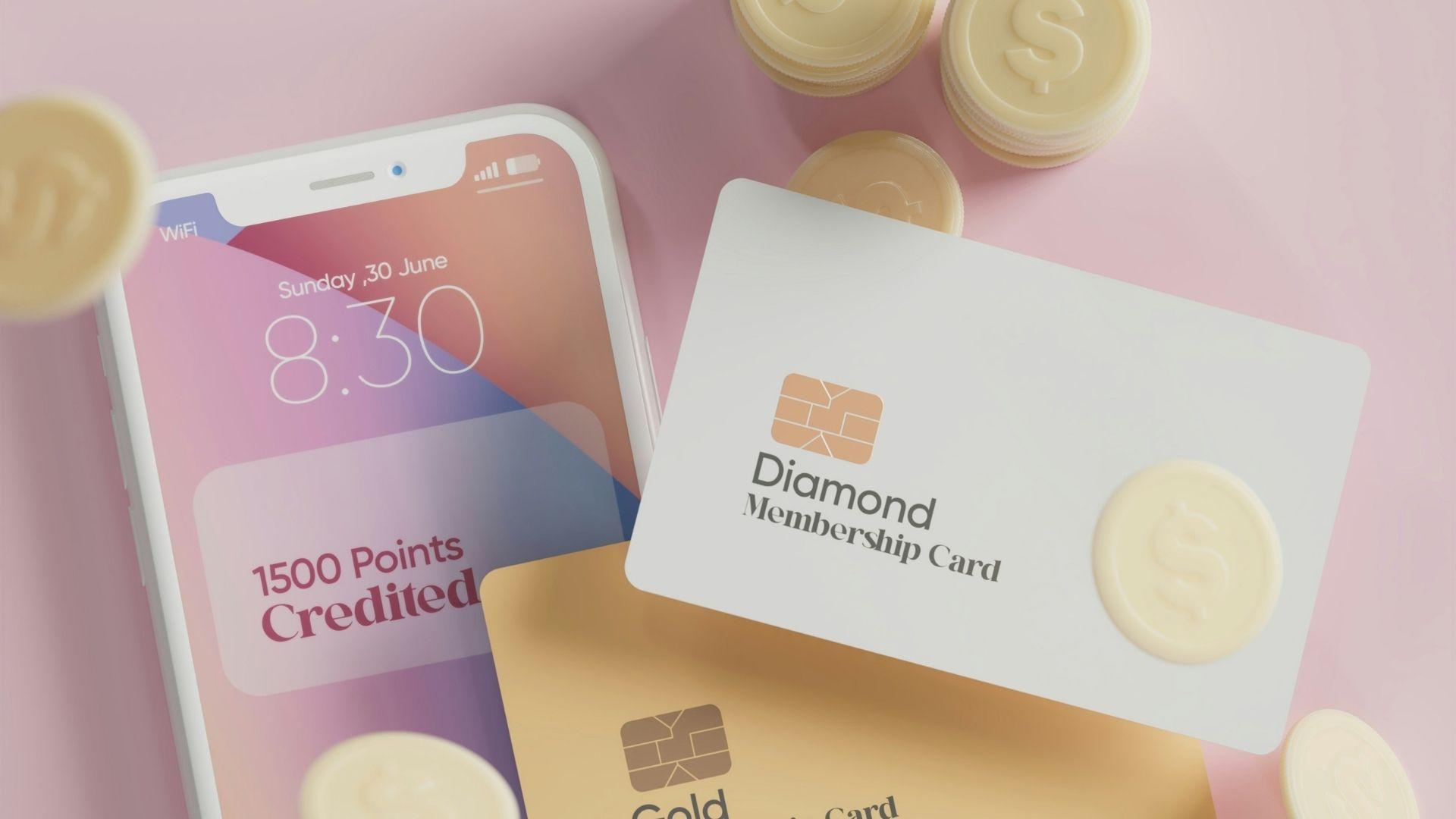
Tiered reward structures address this by creating aspiration above the first redemption. A consumer who has accumulated status within a programme has a tangible reason to maintain their commitment beyond the next promotion cycle. The tier itself becomes a loyalty signal — an acknowledgement from the brand that this consumer's relationship has depth and history. Research consistently indicates that tier-based programmes generate significantly higher lifetime value among engaged members than flat earn-and-burn structures, and that the gap widens as the programme matures.
Community and Purpose-Led Loyalty
The most durable form of FMCG loyalty is one that connects consumers not just to a product, but to a shared set of values or a community of like-minded people. Purpose-led brands have understood this for years — it is why brands like Ben and Jerry's, Oatly, and BrewDog have commanded outsized loyalty relative to their media budgets. They give consumers something to stand for, not merely something to buy.
Community-based loyalty can be built without a formal programme structure. A brand that creates a space — online or offline — where consumers with shared interests can gather, exchange, and identify with one another is building loyalty through belonging. Nescafe's content strategy, which centres on the social rituals around coffee rather than the product attributes of the coffee itself, is a sophisticated example of this: the brand positions itself as the backdrop to connection, conversation, and daily routine rather than as a beverage commodity.
Purpose-led loyalty mechanics are also gaining traction as environmental and social concerns become more central to purchase decisions. Programmes that reward consumers for sustainable behaviours — recycling packaging, choosing concentrated refill formats, reducing food waste — align the brand's sustainability commitments with individual consumer action in a way that is both measurable and genuinely motivating. According to Harvard Business School research, companies that integrate environmental, social and governance principles into their FMCG operations experience meaningfully faster brand loyalty growth than those that treat sustainability as purely a reputational or regulatory matter.
How Smaller FMCG Brands Can Compete on Loyalty
The gap between the resources available to Unilever, P&G, or Nestle and those available to a regional or challenger FMCG brand is enormous, and pretending otherwise would be dishonest. A DTC infrastructure build, a proprietary loyalty platform, and a sustained influencer marketing programme represent investments that most smaller brands cannot make simultaneously. But the underlying strategic logic of what makes FMCG loyalty work does not require a large-company budget to apply.
The first priority for a smaller FMCG brand is closing the data gap with the tools that are already available and genuinely accessible. Receipt scanning partnerships through third-party platforms, QR-code-linked promotions, and simple web or app-based loyalty registration are all viable at a fraction of the cost of building proprietary infrastructure. The goal at this stage is not to build a sophisticated loyalty programme — it is to identify who the brand's core loyalists actually are and to begin a direct relationship with them outside the retailer intermediary.
Purpose is a particularly powerful lever for challenger brands because authenticity is significantly easier to demonstrate at scale when a brand is small enough for its founders and values to be visible. A small organic food brand or a sustainable personal care company can build genuine community loyalty on the strength of its story, its sourcing practices, and the directness of its communication in ways that a global conglomerate, however well-intentioned, will always struggle to replicate. The investment required is not financial — it is creative and relational.
Retailer co-operation should be approached strategically rather than opportunistically. Many grocery retailers now operate retail media networks that give brands access to first-party shopper data in exchange for advertising investment within the retailer's ecosystem. For smaller brands, these networks represent a genuine opportunity to access purchase data that was previously unattainable, and to use it for targeted digital activation that closes the loop between brand awareness and purchase behaviour.
Subscription models deserve consideration for brands in categories with predictable consumption cycles. A subscription not only generates predictable revenue — it also inverts the loyalty challenge: instead of trying to win a consumer back at each replenishment moment, the brand holds the relationship by default. Dollar Shave Club built its entire growth strategy on this insight, and the model has since been applied successfully to pet food, vitamins, coffee, and household cleaning products by brands of varying sizes.
The honest conclusion for smaller FMCG brands is that loyalty is not primarily a technology problem or a budget problem — it is a clarity problem. Brands that are genuinely clear about who they are for, what they stand for, and why a particular consumer's life is better with them in it are the ones that build loyal audiences, regardless of the size of their marketing operation. The tactics exist to amplify and monetise that clarity; they cannot substitute for it. The world's leading FMCG companies have substantial advantages in scale and data infrastructure, but they are still, at their best, chasing the same thing: a consumer who chooses them not because they had no alternative, but because they actively preferred not to.