Personalisation has been part of loyalty programs for years. Or at least, that’s what most brands assume.
In reality, what is often called loyalty personalisation is still based on segments, fixed rules, and repeated rewards. Customers move faster than that. Their expectations are shaped by real-time experiences across different platforms, where relevance is not optional, and timing is everything.
This is where the gap starts to grow. Brands believe they are delivering personalised loyalty programs, while customers experience something predictable and easy to ignore.
AI-powered personalisation in loyalty programs is starting to change this. Not by adding more campaigns or more rules, but by changing how loyalty systems respond to behaviour as it happens.
Why Traditional Loyalty Systems Can’t Keep Up with 2026 Customers
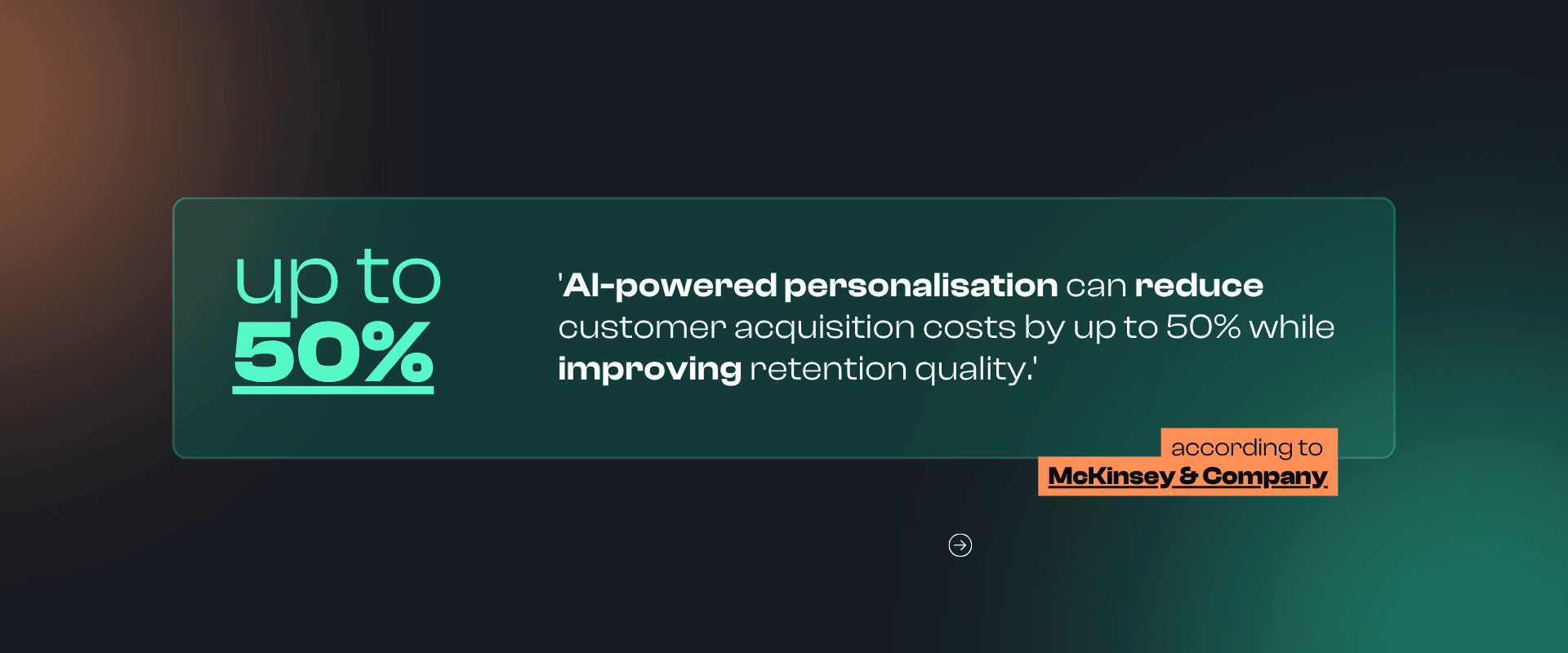
‘71% of consumers expect companies to deliver personalised interactions, and 76% get frustrated when this doesn’t happen.’
But the traditional personalisation efforst do not work as it used to be now.
Most loyalty programs are still built on planned logic. A user enters a segment, a rule is triggered, and a reward is assigned.
It works in controlled conditions, but customer behaviour rarely stays controlled.
People do not follow linear paths. They
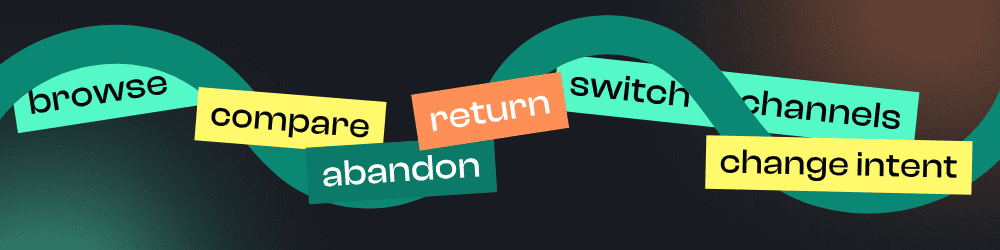
The system, however, keeps treating them as if the moment they were placed in a segment is still valid.
This is where performance drops.
Static Rules vs Real-Time Behaviour
Rule-based loyalty systems are built on predefined conditions.
If a customer does X, they receive Y.
This structure assumes that behaviour can be reduced to stable triggers. It also assumes that once a condition is defined, it remains relevant long enough to produce meaningful engagement.
Neither assumption holds consistently anymore.
A single customer interaction can contain multiple intent signals at once. Exploration, hesitation, and purchase readiness can appear within the same session, sometimes within minutes of each other. These signals do not arrive in a clean sequence.
Traditional systems interpret this complexity through a single rule outcome. In doing so, they simplify behaviour into a single response, even when the underlying intent is shifting.
The result is not incorrect execution. It is a limited interpretation.
The system delivers what it was designed to deliver, but the output no longer matches the complexity of the input.
This is where traditional rule-based personalisation starts to lose precision, not because the logic is wrong, but because the environment it operates in has changed.
Segments Aren’t People: A New Look at Loyalty in 2026
Segmentation was never designed to capture moment-to-moment behaviour.
It is a grouping mechanism, built on shared attributes such as demographics, past purchases, or frequency patterns. It provides structure, but structure does not guarantee relevance.
Two customers can belong to the same segment and behave completely differently in the same context.
One may be actively comparing alternatives.
While the other is returning with purchase intent already formed.
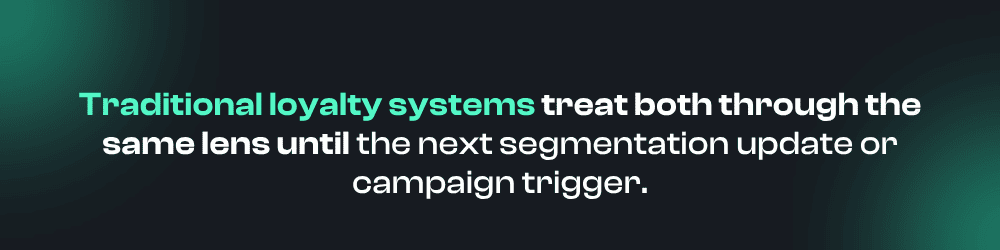
This delay creates a gap between behaviour and response. And in loyalty environments, even small delays reduce perceived relevance significantly.
As a result, personalised loyalty programs built only on segmentation tend to produce consistent outputs, even when customer intent is inconsistent. The experience becomes uniform, while behaviour is not.
That mismatch is where engagement starts to weaken.
What AI-Powered Personalisation Actually Changes in Loyalty Programs?
AI-powered personalisation in loyalty programs does not start with better campaigns. It starts with removing fixed timing from loyalty logic.
Instead of waiting for a user to complete a defined action, systems begin responding to behavioural signals as they happen. A hesitation becomes a signal. A repeat visit becomes a signal. A comparison across categories becomes a signal.
These signals are not treated separately. They are interpreted together in real time.
From Campaign-Based Loyalty to Continuous Engagement
Traditional loyalty programs run in cycles. Campaign goes out, users respond, results are measured, then the next cycle starts.
AI removes this cycle dependency.
Engagement becomes continuous instead of episodic. A customer does not wait for the next reward drop or campaign trigger. The system adjusts its interaction dynamically based on what is happening now.
This creates a different expectation loop. Customers start to experience loyalty as something that responds, not something that activates.
Personalisation Moves From “Who You Are” to “What You’re Doing Right Now”
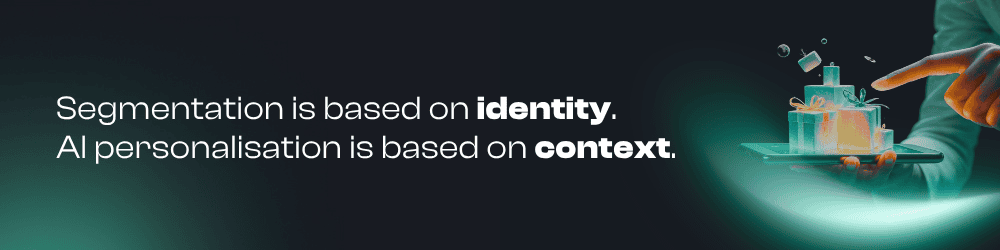
Identity says: this customer is “high value”, “new user”, or “inactive.”
Context says: this user is comparing prices right now, or returning after abandonment, or showing purchase hesitation.
The difference matters because intent changes faster than identity.
AI-powered systems prioritise intent signals over static labels, which is where relevance starts to improve significantly.
Rewards Stop Being Static and Start Becoming Adaptive
In traditional loyalty programs, rewards are predefined. Same offer, same logic, same timing.
With AI-driven personalisation, rewards start adapting to behaviour patterns.
A user who shows hesitation might receive reassurance-based incentives. A returning user might see momentum-based rewards. A highly engaged user might receive progression-based benefits instead of discounts.
The reward is no longer fixed to the campaign. It is shaped by behaviour.
AI Helps Loyalty Become Predictive, Not Reactive
The biggest shift is timing.
Most loyalty programs react after the action is complete. AI allows systems to respond before the next action happens.
This is not a prediction as a concept. It is pattern recognition across continuous behaviour streams.
Engagement becomes less about rewarding the past and more about influencing the next step.
Kaizen’s Perspective
Loyalty personalization already moved past segments and static rewards. Customers respond to what feels relevant in the moment, not to what was defined weeks ago in a campaign setup.
Many loyalty programs still operate on fixed rules. The same triggers, the same rewards, the same logic applied to very different behaviours. This is where the gap shows up.
AI-powered personalisation in loyalty programs changes how this works. Instead of grouping customers and reacting later, it reads behaviour as it happens and adjusts the experience in real time.
The result is not just better targeting, but a different way of guiding engagement altogether.
Kaizen approaches loyalty with this in mind. If the goal is to stay relevant, the system behind loyalty needs to keep learning, not repeating.
Explore how Kaizen builds AI-powered personalisation into loyalty programs and how it connects to what’s coming next at RTS 2026.
Book a Demo | Experience the Power of Kaizen Loyalty Platform